Bag Making Machine After-Sales Service Technical Deep Dive: Remote Diagnostics and Predictive Service
Modern bag making machines are equipped with IoT (Internet of Things) sensors that enable remote diagnostics and predictive service. The machine's controller is connected to the internet (via Ethernet or cellular) and communicates with a cloud-based service platform. The platform collects data from the machine: temperature, pressure, speed, vibration, current, and error logs. The data is analyzed using machine learning algorithms to detect anomalies and predict failures. For example, a gradual increase in sealing bar temperature fluctuation may indicate a failing thermocouple; the system alerts the service team before the thermocouple fails, preventing unplanned downtime. The remote diagnostics also allow the service technician to log into the machine's HMI and PLC to view real-time data, change parameters, and even run diagnostics without being on-site. This reduces the response time and the need for travel. The buyer should ensure that their plant network allows the connection and that cybersecurity measures (firewall, VPN, encryption) are in place. The supplier should provide a data security policy.
Predictive maintenance models: The service platform uses historical data to build predictive models. The models are trained to recognize patterns preceding component failure. For example, bearing wear is detected by analyzing vibration spectra; the model calculates the Remaining Useful Life (RUL) of the bearing. The service team is notified when the RUL drops below a threshold (e.g., 200 hours). The buyer can then schedule a bearing replacement during planned downtime, avoiding a sudden breakdown. The predictive models are continuously improved as more data is collected. The supplier may offer a "health dashboard" that shows the condition of each machine component: green (good), yellow (monitor), red (replace soon). The dashboard is accessible via a web portal or mobile app. The buyer can also set up alerts for specific conditions (e.g., temperature > 180°C). The predictive service is typically included as an add-on to the SLA, costing 10-20% more than basic support. However, it can reduce downtime by 50-70%, making it cost-effective for critical production lines.
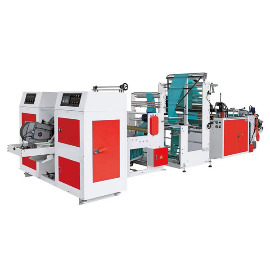
Plastic Bag Making Machine
Proactive service planning: The service platform not only predicts failures but also plans the service intervention. It generates a work order with the required parts, tools, and estimated time. The work order is sent to the buyer's maintenance team and the supplier's service team. The service can be scheduled during a planned shutdown, minimizing production loss. The platform also tracks the service history of each machine, creating a digital twin. The digital twin includes all maintenance records, component replacements, and performance data. This is invaluable for root cause analysis. For example, if a machine has repeated heater failures, the digital twin data can reveal that the failures occur after a specific film type is run, indicating a material-related issue. The buyer can then adjust the film procurement or the machine settings. The proactive service planning also optimizes spare parts inventory – the platform can predict parts consumption and automatically reorder when stock is low. This reduces the buyer's inventory holding cost. By leveraging remote diagnostics and predictive service, buyers can achieve near-zero unplanned downtime, ensuring continuous production and high OEE.
Implementation considerations: The buyer should work with the supplier to set up the IoT connectivity. The machine's control system must have an OPC UA or MQTT interface to send data to the cloud. The buyer's IT department should approve the security setup. The data transmission frequency should be balanced with bandwidth costs – sending data every minute is usually sufficient. The buyer should also ensure that the service platform complies with data privacy regulations (GDPR, etc.). The supplier should provide a data ownership agreement – the buyer owns the machine's data, but the supplier can use it for service purposes. The buyer should also train their staff on using the dashboard and interpreting the alerts. The predictive service is a powerful tool for modern bag making machine operations, transforming reactive maintenance into proactive, data-driven management.