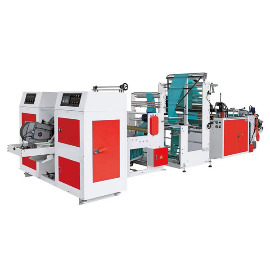
Comprehensive resource covering working principle, bag types (T-shirt, vest, zipper, flat, side/bottom seal), technical specifications, industrial applications, and selection for packaging, retail, and waste management.
A plastic bag making machine (also known as a bag converting machine) is automated equipment that converts roll-fed plastic film (PE, PP, biodegradable resins) into finished bags of various styles. The machine performs sealing, cutting, perforating, and sometimes printing to produce T-shirt bags, vest bags, zipper bags, flat bags, and garbage bags.
Key advantages: High-speed production (up to 300 cycles/min), consistent seal strength, minimal waste, and ability to handle multiple film types including recycled and compostable materials.
The operating sequence involves five core stages:
| Parameter | Typical Range |
| Bag Width | 100 mm – 1200 mm |
| Bag Length | 100 mm – 2000 mm |
| Production Speed | 50 – 300 pcs/min (depending on bag type) |
| Sealing Temperature | 100°C – 250°C |
| Film Thickness | 10 – 200 microns |
| Max Roll Diameter | up to 800 mm |
| Bag Types | T-shirt, vest, side seal, bottom seal, zipper, flat |
T-shirt Bag Machine
Produces bags with handle cut-outs; widely used in supermarkets and retail. Features a punching unit for handle holes.
Vest Bag Machine
Similar to T-shirt but with die-cut handles and optional gusset; often used for heavier loads.
Side Seal / Bottom Seal Bag Machine
Makes flat bags with seals on sides or bottom; common for industrial packaging and produce bags.
Zipper (Reclosable) Bag Machine
Equipped with zipper applicator and slider for food storage and packaging.
Garbage Bag Machine
High-speed production, often with coreless winding and perforation for tear-off.
Retail & Supermarkets
T-shirt and vest bags for grocery checkout, shopping.
Food Packaging
Zipper bags for fresh produce, frozen foods, snack packaging.
Industrial & Waste
Garbage bags, construction debris bags, drum liners.
Medical & Hygiene
Sterile pouches, specimen bags, disposable gloves packaging.
Agricultural
Fruit/vegetable bags, mulch film bags, silage bags.
1. Bag Type & Size
Determine the primary bag style (T-shirt, vest, zipper, flat) and dimensions. Ensure machine has the correct sealing bar and die-cutting module.
2. Film Material
HDPE, LDPE, LLDPE, or biodegradable films require different temperature and tension settings. Check machine compatibility.
3. Production Speed
For high-volume orders, choose a servo-driven machine with speeds >200 cycles/min and reliable photo-eye registration.
4. Automation Level
Options include automatic splicing, stack counting, and in-line printing. Fully automatic lines reduce labor costs.
5. Budget & Maintenance
Compare imported vs. domestic machines; consider spare parts availability and after-sales support.
T-shirt bag vs vest bag machine?
T-shirt has cut-out handles; vest has die-cut handles and often gusseted bottom for strength.
How to clean sealing bars?
Use a brass brush and approved cleaning agent when machine is cooled. Regularly check for charred residue.
What causes film wrinkling?
Uneven tension, misaligned rollers, or improper guiding. Adjust dancer rollers and edge guides.
Can I produce biodegradable bags?
Yes, but adjust temperature down (approx. 120-180°C) and speed slightly lower; verify with manufacturer.