Ziplock Bag Making Machine Technical Deep Dive: Zipper Applicator Technology and Alignment
The zipper applicator is the defining component of a ziplock bag making machine, responsible for attaching the reclosable zipper track to the film opening. The zipper profile is typically made of polyethylene (PE) and consists of male and female interlocking parts. The applicator feeds the zipper from a roll, cuts it to length, and positions it on the film before sealing. The zipper alignment is critical: the zipper must be parallel to the bag opening and centered. The tolerance is ±0.5 mm. The applicator uses servo-driven feed rollers and a cutter to ensure consistent length. The zipper is then guided onto the film edge, and a pair of heated sealing rollers or bars presses it onto the film. The sealing temperature is typically 180-250°C, with a pressure of 3-6 bar, and a dwell time of 0.2-0.5 seconds. The zipper's flanges (the flat parts) are fused to the film, while the interlocking teeth remain free. The seal must be strong enough to withstand repeated opening and closing; the peel strength is typically 15-25 N/25mm.
Zipper alignment is achieved by a combination of mechanical guides and sensor feedback. An optical sensor or ultrasonic sensor detects the zipper's position relative to the film edge. The sensor sends a signal to a servo-driven steering mechanism that adjusts the zipper's lateral position. The steering response must be fast (under 50 ms) to correct deviations at high speed. The zipper feed tension is controlled by a dancer to prevent stretching or bunching. The zipper cutting blade must be sharp to produce clean ends; dull blades cause fraying that can jam the interlocking mechanism. The applicator also has a device to open the zipper (separate the male and female) before sealing to allow later filling; this is often done by a wedge or a pair of rollers that spread the tracks apart.
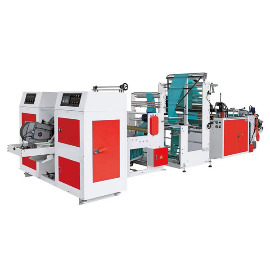
Plastic Bag Making Machine
Sealing parameters for zipper attachment: The temperature must be carefully controlled; too high can melt the interlocking teeth, too low gives weak adhesion. The sealing rollers often have a profile that matches the zipper shape, providing pressure only on the flanges. The cooling after sealing is critical – the zipper must be cooled rapidly to prevent distortion. Water-cooled rollers are common. The entire applicator unit is often integrated with the bag forming section, with the zipper applied to the film before the side seals are made. The registration for the zipper is typically based on a print mark that indicates the bag start; the applicator positions the zipper at the correct distance from the seal.
Quality control: The zipper seal strength is tested periodically by peeling. The zipper's interlocking function is also tested by pulling the zipper open and closed with a force gauge; the opening force should be consistent (e.g., 2-5 N). Vision systems inspect the zipper alignment and the presence of the zipper on each bag. If a bag is missing a zipper or misaligned, it is automatically rejected. The machine also monitors the zipper film tension and alerts if the roll is near end.
Maintenance: The zipper sealing rollers require regular cleaning to prevent residue buildup. The cutting blade needs sharpening every 1-2 million cycles. The zipper guide rails must be kept free of dust. The applicator's servos and bearings need lubrication. By optimizing the zipper applicator,
ziplock bag making machines produce high-quality reclosable bags that meet consumer expectations for convenience and durability, essential for food storage and household applications.