bag making machine specification
Bag making machine specification documents are the primary source of factual information about a machine's capabilities, construction, and performance. A well-written specification sheet provides detailed numerical data on dimensions, speeds, temperatures, power, materials, and optional features, enabling buyers to compare different models objectively. Specifications are typically organized into categories: general (machine type, model, application), mechanical (bag size range, film width, roll diameter), thermal (sealing temperature, heating power), electrical (voltage, power consumption), pneumatic/hydraulic (pressure, flow), control (PLC type, HMI), and environmental (noise, weight, footprint). Understanding these categories helps in extracting the most relevant information for your specific production requirements.
The general specification section identifies the machine's intended use – for example, "high-speed T-shirt bag making machine" or "heavy-duty sack making machine." It includes the model number and manufacturer, as well as the applicable industry standards (CE, UL, etc.). The mechanical specifications are the most detailed, covering maximum film width (e.g., 1200 mm), minimum and maximum bag length (e.g., 200-2000 mm), and bag width range. Roll diameter capacity (often up to 800 mm) and core size are specified for the unwind and rewind stations. The type of sealing – side seal, bottom seal, or both – is clearly stated, along with the number of sealing lines. The cutting mechanism (rotary knife, guillotine, or hot wire) and its blade life expectancy are also included.
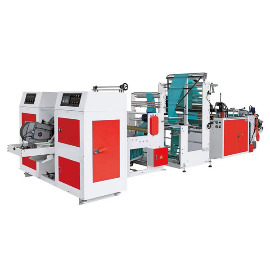
Plastic Bag Making Machine
Thermal specifications are critical for ensuring proper sealing. The temperature range (e.g., 100-250°C), heating element type (cartridge, tubular, or band), and number of temperature control zones are provided. Heating power in kilowatts (kW) and warm-up time (e.g., 15 minutes) give an indication of energy consumption and readiness. Cooling system details, such as water-cooled or air-cooled chill rolls, are specified if the machine handles thick films that require rapid cooling. Electrical specifications include voltage (e.g., 380V, 3-phase, 50/60Hz), total installed power (e.g., 25 kW), and amperage draw. The control voltage (24V DC for sensors) is also noted. For pneumatic machines, air consumption (liters per minute) and required pressure (e.g., 6 bar) are listed; for hydraulic machines, oil type, tank capacity, and pressure (up to 250 bar) are specified.
Production speed is often given as a range, e.g., 50-250 bags/min, depending on bag length and film thickness. Some specifications provide a speed curve or table linking speed to bag length. Accuracy parameters, such as bag length tolerance (±0.5 mm), registration accuracy (±0.3 mm), and seal strength (e.g., 20 N/25mm), are crucial for quality-sensitive applications. The specification also lists the machine's overall dimensions (length × width × height) and net weight (e.g., 4500 kg). Space requirements for operator access and maintenance are sometimes mentioned. Noise level in decibels (e.g., 75 dB) is provided for safety and compliance. Environmental conditions, such as ambient temperature and humidity range for operation, are included to ensure the machine can function in your facility.
Optional specifications list available add-ons: automatic splicer, in-line printer, punch unit, zipper applicator, stacking conveyor, leak tester, and remote diagnostics. Each option has its own sub-specifications – for example, the printer's maximum print width, number of colors, and resolution. The specification sheet should also contain warranty information (typically 12 months) and recommended spare parts kit content. It is advisable to request a specification in a standardized format (e.g., VDI guidelines) to facilitate comparison. When reviewing specifications, pay attention to the conditions under which speed and accuracy are claimed – often at nominal film thickness and bag length. Also, check if the specification includes certification marks (CE, CSA) and test reports. A comprehensive
bag making machine specification is a buyer's best tool for ensuring the chosen machine exactly matches production needs, avoiding costly over-specification or under-capacity pitfalls.