bag making machine raw material
The raw material for a bag making machine is plastic film supplied in roll form, which is converted into finished bags through the machine's operations. The choice of film material directly affects machine settings, production speed, and final bag properties such as strength, transparency, sealability, and environmental impact. The most common materials are polyethylene (LDPE, LLDPE, HDPE), polypropylene (PP), and increasingly biodegradable polymers like PLA and PBAT. Each has unique melting points, stiffness, slip characteristics, and shrinkage behavior that must be accommodated by the machine's tension, sealing temperature, and cooling systems. This guide provides a detailed overview of bag making raw materials, their specifications, quality criteria, and best practices for handling and storing film rolls.
Film types and their properties: LDPE (low-density polyethylene) – flexible, good sealability, melting point ~110°C, used for soft bags like produce and bread bags. LLDPE (linear low-density polyethylene) – higher tensile strength and tear resistance, used for heavy-duty bags and stretch films. HDPE (high-density polyethylene) – stiffer, more opaque, higher melting point ~130°C, used for T-shirt and grocery bags. PP (polypropylene) – high clarity, good moisture barrier, higher melting point ~160°C, used for food packaging and laminated films. PLA (polylactic acid) – biodegradable, lower melting point ~140°C, requires lower sealing temperatures and careful tension control. PBAT – biodegradable polyester, flexible, used in compostable bags. Film specifications include thickness (microns), width (mm), roll diameter (mm), core size, and weight per roll. Thickness tolerance is critical – variations cause sealing and cutting issues.
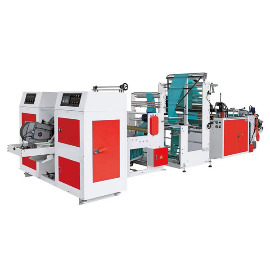
Plastic Bag Making Machine
Film quality criteria: The film must have uniform thickness (tolerance ±5%), consistent slip properties (coefficient of friction 0.2-0.4), and good heat sealability. Additives such as slip agents, anti-block agents, and antistatic agents are often blended to improve machineability. Poor quality film can cause wrinkles, sticking, static, and seal defects. Always request a material data sheet from the film supplier and verify it matches your machine's specifications. For printed bags, the film must have good ink adhesion and print registration marks with good contrast.
Roll handling and storage: Film rolls should be stored horizontally in a cool, dry environment to prevent moisture absorption (especially for biodegradable films) and to maintain flatness. Avoid exposure to direct sunlight or excessive heat, which can cause roll deformation. When loading a roll onto the unwind stand, handle it carefully to avoid edge damage. The roll's core must fit the shaft securely – any play causes eccentric unwinding. For large rolls (over 500 mm diameter), use a roll hoist to prevent injury.
Matching film to machine: The machine's sealing temperature range must cover the film's melting point. For example, running PLA on a machine designed for HDPE may cause burn-through because PLA's optimal temperature is much lower. The tension control must be adjusted for film stiffness – stiff films (HDPE, PP) require higher tension to prevent wrinkling, while soft films (LDPE, PLA) need lower tension to avoid stretching. The cutting system must be sharp enough for the film's tear strength. Always run trial batches with a new film to optimize settings before full production.
Quality control of incoming film: Before loading a new roll, inspect the film for surface defects (gels, black specks, scratches) and measure thickness at several points using a micrometer. Check the roll's edge condition – irregular edges cause wandering. Keep a log of film supplier, batch number, and performance in production. This helps trace issues back to material variations. By understanding the raw material thoroughly and maintaining strict quality control, bag manufacturers can achieve consistent output, reduce waste, and ensure that the final bags meet their mechanical and aesthetic requirements.