bag maker
A bag maker is a term broadly used to describe any machine or combination of equipment used in the production of bags from flexible materials, primarily plastic film but also paper, nonwoven fabrics, and biodegradable composites. The bag maker is the heart of any bag production plant, responsible for converting raw roll stock into a finished product that meets specific size, strength, seal integrity, and aesthetic requirements. Bag makers range from simple manual units for prototype or small-batch production to fully automated, multi-station lines capable of producing millions of bags per month with minimal human oversight. The versatility of a bag maker lies in its ability to handle various film types, incorporate different seal patterns, and add features like handles, zippers, and print registration, making it an essential investment for custom packaging manufacturers and high-volume converters alike.
The fundamental architecture of a bag maker consists of several integrated modules that work in harmony to achieve the final bag formation. The unwinding module carries the film roll and incorporates a tension control system, typically using a dancer arm or load cell feedback to maintain uniform tension throughout the process, preventing film deformation. The film advancing module uses driven nip rollers that pull the film through the machine at precise intervals, with servo motors ensuring accurate step lengths that determine the bag length. The sealing module contains heated bars or wheels that create the bag's bottom seal, side seal, or both, with temperature controllers maintaining the optimal setting for the specific film grade. The cutting module, using either a rotary shear or a guillotine blade, separates individual bags from the continuous web. Optional modules include a punch unit for handle cut-outs, a gusset former for side folds, a zipper applicator for reclosable features, and a stacking conveyor that counts and collates finished bags into neat bundles ready for packing.
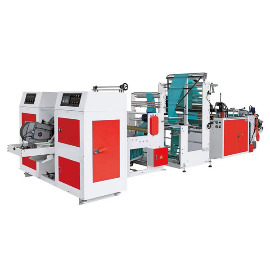
Plastic Bag Making Machine
Key performance indicators for a bag maker include production speed, maximum bag width, seal strength consistency, and material waste percentage. High-speed bag makers can achieve 300 cycles per minute for simple flat bags, while more complex designs with punching or zipping may run at 100-150 cycles per minute. Bag width capacity typically ranges from 150 mm to 1200 mm, with custom machines available for widths beyond 2 meters. Seal strength is measured by peel force, with modern bag makers delivering over 20 Newtons per 25mm width for LDPE films, ensuring bags withstand filling and handling. Material waste, which directly affects profitability, should be below 2% for well-tuned machines, achieved through precise film guiding and registration. Energy efficiency, expressed in kilowatt-hours per thousand bags, is increasingly important, with servo-driven bag makers consuming 30-40% less power than older pneumatic or clutch-brake designs, reducing operational costs and carbon footprint.
The market offers various configurations of bag makers, each optimized for a specific bag type. The T-shirt bag maker is a staple in the retail sector, featuring a punching station that cuts out integral handles and a notch for tear-off, producing bags that are easy to carry and dispense. The vest
bag maker, also known as a die-cut handle bag maker, produces bags with robust handles and often includes a gusset former, making the bag suitable for heavier items and providing a stable bottom when placed on a surface. The side-seal bag maker is the simplest design, used for flat bags without handles, ideal for produce, hardware, and garment covers. The bottom-seal bag maker is similar but seals the bottom of the bag, offering slightly better strength and used for trash bags and general merchandise. The zipper bag maker is the most complex, adding a zipper feeding and sealing station that attaches a plastic zipper track to the bag opening, used extensively for food storage and consumer packaging. The stand-up pouch maker produces a three-side sealed pouch with a bottom gusset that allows the bag to stand independently, popular for premium products like coffee, nuts, and liquid soaps.
Applications for bag makers are diverse, with customizations available to meet specific industry requirements. In the food packaging sector, bag makers are used for bread bags, produce bags, frozen food pouches, and snack packaging, with machines built from food-grade materials and featuring easy-clean surfaces to maintain hygiene standards. The healthcare industry utilizes bag makers for medical specimen bags, IV solution pouches, and biohazard waste bags, often requiring cleanroom-compatible designs and sterilizable components. The retail and consumer goods sector produces shopping bags, garment bags, and gift bags, where aesthetic features like high-quality printing, color matching, and consistent perforations are essential. Industrial packaging applications include heavy-duty bags for chemicals, construction materials, and agricultural products, where bag makers are engineered with reinforced frames, larger sealing bars, and higher pressure capabilities to handle thick films. The e-commerce boom has also created demand for bag makers that produce poly mailers and bubble-lined envelopes, integrating printing and labeling modules to provide ready-to-ship packaging directly from the bag maker.
When investing in a bag maker, buyers should conduct a comprehensive needs assessment covering production volume, bag design complexity, and material types. Begin by forecasting your average and peak daily production requirements, then select a bag maker with a rated output that exceeds this by at least 20% to accommodate future growth and routine maintenance. Bag design must be detailed down to the millimeter, including dimensions, seal type, handle style, zipper presence, and any embossing or perforation requirements, as these dictate the required modules and tooling. Film material selection affects the sealing temperature range and the type of sealing bars needed – for example, biodegradable films require lower temperatures and faster cooling, so ensure the bag maker has precise temperature controls and a well-designed cooling system. Evaluate the machine's control system: modern touchscreen PLCs with recipe storage and remote diagnostic capabilities reduce operator training time and facilitate rapid troubleshooting. Consider the supplier's technical support, including installation supervision, operator training, and availability of spare parts, as these are critical for minimizing downtime and protecting your investment. Lastly, review the machine's safety features, including emergency stops, light curtains, and safety interlocks, to ensure operator protection and regulatory compliance.
Optimizing the performance of a bag maker requires a disciplined approach to setup, operation, and maintenance. Proper setup begins with correct film threading and tension calibration, using the machine's tension display to set the dancer arm at its optimal working range. Sealing temperature and pressure should be set according to the film manufacturer's recommendations, with test runs conducted to verify seal strength using a peel tester. Operators must be trained to monitor bag quality continuously, checking for seal integrity, accurate cutting, and any visual defects like burn marks or wrinkles, and to make incremental adjustments to temperature or pressure as needed. A cleaning schedule should be strictly followed, with daily cleaning of sealing bars and guide rollers to prevent buildup of film residue, and weekly cleaning of air filters and cooling fans to maintain proper thermal management. Keep detailed production logs recording machine parameters, batch numbers, and any defect rates, as this data helps in identifying trends and predicting maintenance needs. By adhering to these practices, a bag maker can achieve consistent output quality, lower scrap rates, and extended service life, making it a reliable and profitable asset in any packaging operation.