bag making machine for industrial packaging
A bag making machine for industrial packaging is a rugged, high-force production system engineered to manufacture heavy-duty bags and sacks used for bulk industrial products such as cement, chemicals, fertilizers, animal feed, construction materials, and mineral powders. These machines are distinct from standard bag makers in their ability to handle thick films (100-300 microns), woven polypropylene fabric, laminated structures, and multi-layer co-extrusions that provide superior strength, puncture resistance, and moisture barrier. Industrial bag machines typically operate at slower speeds – 20 to 80 bags per minute – due to the heavier materials and longer sealing and cooling times required. They are built with reinforced frames, powerful hydraulic or pneumatic systems, and oversized sealing bars to ensure consistent, high-integrity seals that can withstand rough handling and heavy loads (up to 50 kg). These machines are essential for converters supplying the construction, agriculture, chemical, and mining industries.
The operational process of an industrial bag making machine begins with the unwinding of heavy film rolls (often over 800 mm diameter) from a reinforced unwind stand with powerful braking systems to control the high tension required for thick films. The film passes through heavy-duty guide rollers and enters the sealing station, which uses wider sealing bars (up to 20 mm) and higher pressure (up to 50 tons in hydraulic models) to fuse thick layers. For woven polypropylene sacks, a hot-air sealing system is often employed, where heated air melts the polymer coating, and then pressure rollers fuse the layers. After sealing, the film moves to a cutting station, usually a heavy-duty guillotine knife that can slice through multiple layers. The cut bags are then stacked on a heavy-duty conveyor, often with a compression unit to flatten the thick material. Many industrial machines include a valve insertion module for valve sacks used in automatic filling lines. The entire process is controlled by a robust PLC with a simplified interface, as industrial environments prioritize durability over complex features.
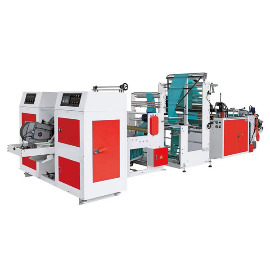
Plastic Bag Making Machine
Key technical specifications for industrial bag making machines include bag width (400-1200 mm, up to 1600 mm for specialty), bag length (500-2000 mm), film thickness (100-300 microns for PE, up to 150 gsm for woven), production speed (20-80 BPM). Sealing temperature ranges from 180-300°C for woven coatings, and 150-250°C for thick PE films. Sealing pressure is typically 5-50 tons (hydraulic) or 6-10 bar (pneumatic with large cylinders). Power consumption is high, often 30-60 kW, with compressed air at 7-10 bar. The cutting knife must be made of hardened steel and replaced periodically. The stacking unit can handle 50-200 bags per stack, with an automatic counter. Optional features include a bottom folder for flat-bottom sacks, a perforation unit for tear-open bags, and an in-line leak tester for quality assurance. The machine's frame is typically fabricated from heavy-gauge steel with welded construction to withstand vibration and shock loads.
Industrial bag making machines are used across numerous heavy industries. Cement and gypsum producers rely on these machines for multi-wall paper sacks and woven PP sacks that must survive rough handling on construction sites. Chemical companies use them for packaging fertilizers, plastic pellets, and powdered additives, requiring excellent moisture and contamination barriers. The animal feed industry uses heavy-duty sacks for grains, pellets, and meals, where seal strength prevents spillage during transport. Mining operations use sacks for ore concentrates and mineral powders. The waste management sector uses these machines for large bin liners and construction debris bags. With the increasing demand for sustainable industrial packaging, some machines are now adapted to process recycled PE and paper-plastic laminates, though this requires careful adjustment of sealing parameters to maintain strength.
Selecting an industrial bag making machine requires evaluating the material type, bag weight capacity, and production volume. For woven polypropylene sacks, choose a machine with hot-air sealing and a robust valve insertion unit if you need valve sacks. For heavy PE film, a hydraulic bottom-seal machine with a guillotine cutter is appropriate. Determine the required seal strength – industrial bags often need a peel strength exceeding 30 N/25mm – and verify the machine can achieve this consistently with your material. Production speed is lower than retail machines, so if you need high output, consider multiple machines or a dual-lane system. The machine's footprint is large, often exceeding 10 meters in length, so plan floor space accordingly. Also, assess the availability of spare parts, especially for hydraulic components and heating elements, as industrial machines often run 24/7 in harsh environments. Request a demonstration using your actual film to verify seal quality and bag dimensions under load conditions.
Maintenance of an industrial bag making machine is intensive and safety-critical. Daily, inspect the sealing bars and hot-air nozzles for wear and cleanliness; any residue can cause weak seals. Check hydraulic fluid levels and look for leaks in hoses and fittings. Weekly, lubricate all heavy-load bearings and the guillotine slide ways with high-pressure grease. Monthly, calibrate the temperature sensors and pressure transducers, and check the alignment of the cutting blade with the anvil. For hot-air systems, clean the air filters and verify the airflow rate. Every 6 months, replace the hydraulic oil and filter elements, and inspect the cylinder seals. The guillotine blade should be sharpened or replaced every 500,000 cuts to maintain clean edges. Keep a detailed maintenance log to track component wear and schedule preventive replacements. Because industrial machines handle heavy materials, ensure all safety guards and interlocks are functioning correctly to protect operators from the high forces involved. By maintaining a rigorous schedule, an industrial bag making machine can provide reliable, high-strength bag production over many years, supporting the demanding logistics of heavy industry.