bag making machine for retail
A bag making machine for retail is a specialized production system focused on manufacturing shopping bags, merchandise bags, and promotional bags used in retail environments. These machines predominantly produce T-shirt bags, vest bags, and flat bags with or without handles, often with high-quality printing to display brand logos and messages. Retail bag machines are among the most common bag making equipment globally, given the enormous daily consumption of shopping bags in supermarkets, department stores, boutiques, and convenience stores. They are optimized for high-speed production (120-250 bags per minute), quick changeovers for different bag sizes, and integration with in-line printing for cost-effective branding. The machines are also adapted to handle lightweight films (15-50 microns) to reduce material cost while maintaining adequate strength for typical retail loads. With the shift towards sustainable retail, many machines now process biodegradable films and incorporate recycled content.
The operational sequence of a bag making machine for retail varies by bag style but generally includes film unwinding, sealing, handle forming (if applicable), cutting, and stacking. For T-shirt bags, the machine uses a punching station to create handle holes and a central notch for easy dispensing. For vest bags, a die-cutting station produces reinforced handles and may include a gusset former for increased capacity. Flat retail bags (no handles) are produced using simpler bottom-seal or side-seal configurations. Most retail bag machines include a printing station (flexographic) that applies branding, barcodes, and recycling information directly onto the film before bag forming. The registration system ensures that the print aligns perfectly with the cut and handle positions. The stacking system counts bags into bundles, often with a compression unit to flatten them for packing. Many machines are equipped with automatic splicing to allow continuous operation when the film roll runs out, reducing downtime and labor.
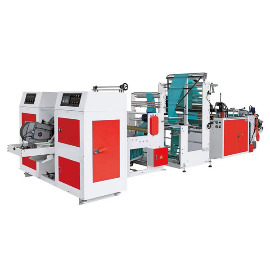
Plastic Bag Making Machine
Key technical specifications for retail bag making machines include bag width (200-700 mm for T-shirt/vest, up to 1200 mm for flat merchandise bags), bag length (300-800 mm), film thickness (15-60 microns), production speed (120-250 BPM for T-shirt, 80-150 BPM for vest, up to 300 BPM for flat). The handle punching or die-cutting unit requires high-speed actuators capable of 200+ strokes per minute. The printing station typically supports 2-6 colors with a print registration accuracy of ±0.3 mm. Sealing temperature ranges from 120-180°C for thin films. Power consumption is 15-40 kW, and compressed air demand is 6 bar at 600-1000 L/min. The stacking unit often includes a counter that can be preset to 50-100 bags per bundle. Optional features include an automatic roll loader, a hole punch for hanging display, and a tie-on label applicator for promotional tags.
Applications of retail bag machines are centered around the retail sector. Supermarkets and hypermarkets use T-shirt and vest bags for customer purchases, often printed with store branding and loyalty program information. Boutiques and clothing stores prefer vest bags with reinforced handles for carrying apparel, as they provide a premium feel. Convenience stores and pharmacies use flat bags for small merchandise. E-commerce fulfillment centers use retail bag machines to produce poly mailer bags for shipping clothing and accessories, sometimes with perforated tear strips. Promotional events and trade shows use custom-printed T-shirt bags as giveaways. The growing demand for reusable and recycled-content bags has led to retail bag machines that can process post-consumer recycled PE, which has different melt properties and requires careful temperature adjustment to maintain print and seal quality.
Selecting a
bag making machine for retail involves evaluating the bag style, print requirements, and production volume. For a supermarket chain, a high-speed T-shirt bag machine with 4-color printing and automatic stacking is essential to meet daily demand. For a boutique, a vest bag machine with die-cut handles and optional gusset may be more appropriate to create a premium appearance. Consider the printing resolution needed – flexographic printing is standard for retail, but if you require high-resolution graphics (e.g., for luxury brands), gravure or digital inline printing may be necessary. The machine's changeover time is crucial if you produce different bag sizes for various customers; look for machines with quick-release handle punches and adjustable sealing bars. For retailers with sustainability goals, verify the machine's compatibility with certified compostable films. Also, evaluate the machine's safety features – retail environments often have less experienced operators, so emergency stops, light curtains, and interlocking guards are important.
Maintenance of a bag making machine for retail focuses on the punching/die-cutting unit and the printing station. The handle punch dies require daily cleaning to remove film debris and periodic sharpening (every 1-2 million cycles) to maintain clean cuts. For vest bag die-cutters, inspect the die knives for wear and replace them as needed. The printing anilox rollers must be cleaned thoroughly after each shift to prevent ink drying and clogging of cells. The doctor blades should be replaced weekly to maintain print quality. Sealing bars need daily cleaning with a brass brush to remove charred residue. The registration sensors (cameras) require weekly calibration and lens cleaning. Lubricate all high-speed bearings with appropriate grease monthly. Since retail bag machines often run long hours, implement a preventive maintenance schedule that includes a weekly inspection of all drive belts and a monthly check of servo motor temperatures. Keep a stock of common consumables – punch dies, anilox rollers, and sealing bar coverings – to minimize downtime. By maintaining the machine in top condition, retailers and converters can ensure consistent bag quality, vibrant prints, and reliable supply to meet the fast-paced demands of the retail market.