bag making machine spare parts
Spare parts are the lifeline of a bag making machine's continued operation. Without timely access to replacements, a minor component failure can lead to hours or days of downtime, costing thousands in lost production. This guide covers the essential spare parts for bag making machines – consumables and critical components – how to determine optimal inventory levels, sourcing strategies, and tips for reducing spare parts costs while ensuring availability. Proper spare parts management is a key pillar of maintenance excellence and operational reliability.
Consumable parts that require frequent replacement: Sealing bar coverings (Teflon or silicone tape) – need changing every 1-3 months depending on runtime. Heating elements (cartridge or band heaters) – typical life 2000-5000 hours. Thermocouples – can drift and need replacement annually. Blades (guillotine or rotary) – sharpened regularly, replaced every 1-2 years. O-rings and seals for pneumatic cylinders – replace during routine maintenance. Filters – air filters, oil filters, and coolant filters – change every 3-6 months. Lubricants – grease and oil for bearings and gearboxes. These consumables should be kept in sufficient quantity to cover at least 3-6 months of normal use, based on your production hours.
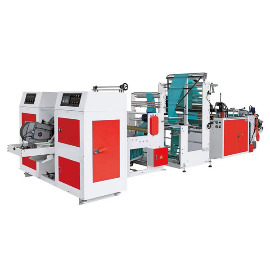
Plastic Bag Making Machine
Critical components that have longer life but can cause major downtime if they fail: Servo motors and drives – expensive but essential; having a spare motor for critical axes is advisable if lead time is long. PLC and I/O modules – control system failures are rare but catastrophic; keep a backup PLC or at least a programmed memory card. Pneumatic cylinders – can fail due to seal wear; keep common sizes in stock. Hydraulic pumps and valves (for hydraulic machines) – have a spare pump cartridge. Gearboxes and bearings – for high-speed shafts, keep replacement bearings. Sensors (photoelectric, proximity, load cells) – these are relatively cheap; keep 2-3 of each type. For older machines, consider stocking hard-to-find components.
Inventory planning: Start with the supplier's recommended spare parts list (often provided at purchase). Add based on your machine's configuration and your past failure history. For each part, note the supplier, part number, lead time, and cost. Categorize parts by lead time: items with >30 days lead time should be kept in stock; items with <7 days lead time can be ordered as needed. Use a min-max system: when stock falls below the minimum, reorder. For expensive items, consider a consignment stock arrangement with the supplier. Also, pool spare parts across multiple identical machines to reduce total inventory.
Sourcing spare parts: The best source is the original machine manufacturer – they guarantee fit and performance, but may be more expensive. Alternative suppliers (third-party) can offer lower prices for common items like heaters, blades, and belts, but quality must be verified. For obsolete machines, you may need to cross-reference or have parts custom-made. Always keep the machine's documentation (drawings, part numbers) to help sourcing. Online marketplaces and local industrial distributors can be sources. However, for safety-critical components (like heaters and sensors), use the manufacturer's approved parts to avoid risks.
Cost management: Buying in bulk (e.g., a year's supply of consumables) often secures a discount. Standardize parts across machines – e.g., use the same heater type and blade size on multiple lines. Negotiate a spare parts discount as part of the original machine purchase – many suppliers offer a 10-15% discount on the first spare parts kit. Keep track of parts consumption to identify trends – if a part is failing prematurely, investigate root cause (e.g., incorrect setting) to prevent recurrence. Also, consider refurbishing certain components (like servo motors) instead of buying new, if a qualified local shop exists. By implementing a systematic spare parts management plan, you can drastically reduce machine downtime, avoid emergency shipping costs, and ensure that your bag making machine continues to produce reliably for years.