recycled bag making machine
A recycled bag making machine is a production system specifically designed or adapted to manufacture bags from recycled plastics, including post-consumer recycled (PCR) and post-industrial recycled (PIR) resins. These materials are derived from used plastic bottles, films, and industrial scrap, and they present unique challenges such as varying melt flow rates, contaminants, and reduced mechanical properties. Recycled bag machines must be equipped with robust filtering systems, flexible temperature controls, and reinforced drives to handle the inconsistent quality of recycled pellets. They are used to produce shopping bags, garbage bags, and industrial sacks, helping brands and retailers meet sustainability goals and comply with regulations mandating recycled content. Speeds are generally 10-20% lower than virgin-material machines, around 100-200 bags per minute, depending on the level of contamination and the film consistency. These machines are vital for the circular economy, converting waste into new packaging.
The operational process of a recycled bag making machine is fundamentally similar to a conventional bag machine, but with several critical modifications. The extrusion stage (if integrated) often includes extra melt filters and screen changers to trap contaminants. The film thickness must be monitored closely, as recycled resins may have density variations. In the bag making section, the tension control must be adaptive, as recycled film can have periodic stiffness changes due to inconsistent polymer chains. The sealing temperature must be set slightly higher (by 5-10°C) to compensate for lower melt strength, but with careful monitoring to avoid burning. The sealing pressure is increased to ensure fusion despite potential contaminants on the film surface. The cutting blade must be sharper and replaced more frequently, as recycled film may contain abrasive particles. Some machines include an in-line metal detector to identify metallic contaminants before they damage the sealing bars. The stacking and winding units are similarly adjusted to handle film that may be more prone to blocking (sticking) due to additives.
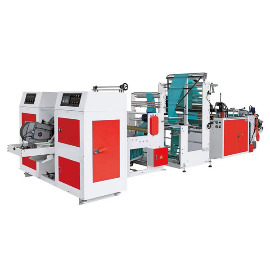
Plastic Bag Making Machine
Key technical specifications for recycled bag making machines include bag width (100-1200 mm), bag length (150-2000 mm), film thickness (20-150 microns, but recycled films often thicker), production speed (100-200 BPM for good PCR, lower for high-contaminant). Sealing temperature range is typically 130-220°C, with adjustable pressure up to 8 bar. The machine requires more frequent filter cleaning on the film path. Power consumption is similar to conventional machines (15-40 kW), but with added load for extra heaters. Optional features include a film surface cleaner (e.g., corona treater) to improve sealability, a vision system to detect black specks or gels, and an automatic rejection system for off-spec bags. The machine's construction may include abrasion-resistant coatings on guide rollers.
recycled bag making machines are used by converters who supply large retailers with bags containing 30-100% recycled content. Garbage bag manufacturers use recycled resins to produce affordable trash bags while meeting green procurement policies. Industrial bag producers use recycled content for non-food applications like construction waste sacks. The growth of Extended Producer Responsibility (EPR) regulations has accelerated the demand for these machines. Some machines are configured to run both virgin and recycled materials, allowing converters to switch based on availability and cost. However, running recycled resins requires thorough cleaning of the machine between runs to avoid cross-contamination.
Selecting a recycled bag making machine requires assessing the quality and consistency of the recycled resin you will use. If you process highly contaminated PCR (e.g., from municipal waste), choose a machine with heavy-duty filtering and a more powerful drive to handle lumpy film. If you use high-quality PIR (post-industrial), a standard machine with minor modifications may suffice. Ask the manufacturer about the maximum contaminant tolerance and the recommended screen mesh for melt filters. Production speed will be lower than virgin PE; factor this into your capacity planning. Consider the machine's ability to handle anti-block and slip additives, which are often added to recycled films to prevent sticking. Also, evaluate the cooling system – recycled films often retain heat longer, so a more efficient chill roller is needed. Request a long-term trial with your recycled resin to verify sealing performance and seal strength over time, as recycled resins can vary batch-to-batch.
Maintenance of a recycled bag making machine is more frequent and includes additional tasks. The sealing bars must be cleaned more often (every 1-2 hours) because contaminants can char and form deposits. Inspect the sealing bar covering for wear daily; contaminants can abrade it quickly. The melt filters (if extruder is integrated) need replacement every shift or even every few hours depending on contamination. The guide rollers should be checked for scratches weekly, as abrasive particles can damage them. The cutting blade should be inspected every shift and sharpened more frequently. The vision system (if installed) needs calibration weekly to maintain defect detection accuracy. Lubricate all moving parts with high-temperature grease, as recycled films often run at higher temperatures. Keep a larger inventory of spare parts – sealing bars, blades, filters – as they wear faster. Document the source and quality of each recycled resin batch, and correlate with machine settings and production issues, to build a knowledge base for future runs. By adopting proactive maintenance and robust filtration, a recycled bag making machine can successfully convert waste into functional packaging, contributing to a more sustainable plastics industry.