Buy Bag Making Machine Technical Deep Dive: Financial Evaluation and ROI Modeling
When buying a bag making machine, financial evaluation is as important as technical assessment. The investment decision should be based on a detailed ROI model that considers the machine's cost, operating expenses, and revenue generation. The ROI model includes: initial capital cost (machine price, installation, training, shipping, duties); annual operating costs (energy, labor, maintenance, consumables, downtime); and annual revenue (based on production capacity and selling price per bag). The payback period is the time required for the cumulative net profit to equal the initial investment. For a typical high-speed bag machine, payback is often 1-3 years. The Net Present Value (NPV) calculates the present value of future cash flows minus the initial investment, using a discount rate (e.g., 10% to reflect the cost of capital). A positive NPV indicates a good investment. The Internal Rate of Return (IRR) is the discount rate at which NPV equals zero; an IRR higher than the hurdle rate is acceptable. The model should also include a sensitivity analysis to assess the impact of variations in key parameters: film cost, selling price, machine speed, and uptime. For example, a 5% increase in film cost reduces NPV by 10%. This analysis helps in risk assessment and decision-making.
Cost-benefit analysis: The benefits of a new machine include higher production speed, better quality (reduced rejects), lower energy consumption, and reduced labor. These benefits are quantified and compared to the costs. For a machine upgrade, the incremental benefit over the existing machine is calculated. The analysis should include the cost of financing (if the purchase is financed) – interest payments and loan fees. The buyer should also consider the tax benefits: depreciation and interest are deductible, reducing the effective cost. The machine's residual value at the end of its useful life (typically 10-15 years) should be included as a positive cash flow. The model should be run for different scenarios (e.g., optimistic, base, pessimistic) to understand the range of outcomes. The buyer should also assess the strategic benefits: ability to enter new markets, meet customer demands for faster delivery, or improve sustainability. These qualitative factors are considered alongside the financial metrics.
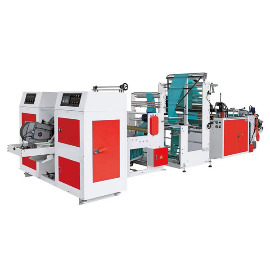
Plastic Bag Making Machine
Sensitivity analysis and risk assessment: Key variables that affect ROI are: 1) Machine utilization (hours per shift, shifts per day). 2) Reject rate – a 1% improvement in reject rate can increase profit by 5%. 3) Film waste – reducing edge trim and startup waste improves material yield. 4) Energy cost – a 10% increase in electricity price affects operating costs. 5) Selling price – competitive pressure may lower bag prices. The sensitivity analysis shows which variables have the greatest impact. The buyer can mitigate risks by negotiating a fixed electricity price or locking in film supply contracts. The machine's performance guarantees (speed, quality) should be part of the contract, with penalties if not met. This reduces performance risk. The buyer should also have a contingency budget for unexpected costs (e.g., 10% of machine price). By conducting a thorough financial evaluation and ROI modeling, buyers can make a data-driven decision, ensuring that the bag making machine purchase is financially sound and aligns with the company's strategic goals.
Financing options: The buyer can choose between cash purchase, bank loan, equipment leasing, or supplier financing. Cash purchase gives full ownership and no interest, but ties up capital. Bank loans are common, with interest rates 5-10%. Leasing (operating or finance lease) spreads the cost and may have tax advantages; the buyer can deduct lease payments as operating expenses. Supplier financing may offer competitive rates but is often limited to certain regions. The buyer should compare the total cost of each option, including interest, fees, and residual value. The financing decision affects the cash flow and ROI. The buyer should also consider the machine's lifespan; a longer useful life favors purchase over lease. By evaluating financing options, buyers can optimize their capital structure and improve the project's financial viability.