bottom sealing bag making machine
A bottom sealing bag making machine is one of the most common and versatile types of bag production equipment, designed to produce flat bags with a single seal at the bottom and an open top. These machines are the workhorse of the packaging industry, used to manufacture bags for produce, bread, hardware, garment covers, and countless other applications. The bottom seal is created by a heated sealing bar that fuses the film layers together across the entire width of the bag, forming a strong, uniform closure. Bottom sealing machines are known for their simplicity, reliability, and high speed, with many models achieving 250 to 300 bags per minute for thin films. They are available in both semi-automatic and fully automatic configurations, and can handle a wide range of film materials including LDPE, HDPE, PP, and biodegradable resins. Their straightforward design makes them a popular choice for converters of all sizes, from small custom bag shops to large industrial producers.
The operational workflow of a bottom sealing bag making machine begins with the film unwinding from a roll mounted on an unwind stand with tension control. The film passes through guide rollers and edge guide systems to maintain straight tracking. It then enters the sealing station, where a heated bottom sealing bar descends onto the film, applying pressure and heat for a preset dwell time to fuse the layers. The sealing temperature is precisely controlled by a PID controller, typically ranging from 120°C to 200°C depending on the film type. After sealing, the film advances to the cutting station, where a rotary or guillotine blade cuts the sealed tube to the desired bag length. The cut bags are then conveyed to a stacking table, where they are counted and collected. For printed films, a registration sensor (photoelectric or CCD camera) is positioned before the sealing station to ensure that the seal and cut align perfectly with the print marks, maintaining consistent bag appearance.
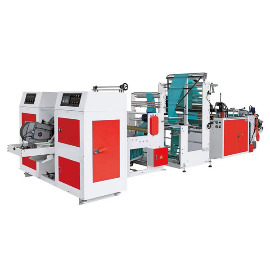
Plastic Bag Making Machine
Key technical specifications for bottom sealing bag making machines include maximum bag width (typically 100-1200 mm), bag length (100-2000 mm), film thickness (10-150 microns, with heavy-duty models handling up to 250 microns), and production speed (150-300 BPM). The sealing bar width matches the bag width, and its temperature is adjustable with accuracy of ±1°C. Sealing pressure is provided by pneumatic cylinders, usually adjustable from 1 to 6 bar. The machine's electrical power consumption ranges from 5 to 25 kW depending on heating capacity and servo motor sizes. The cutting mechanism can be rotary (for high speed) or guillotine (for heavier films). The stacking unit typically includes a conveyor belt and an automatic counter that signals when a preset number of bags is reached. Optional features include a perforation unit for creating tear-off bags on a roll, a punch unit for hanging holes, and an electrostatic eliminator to prevent bag sticking.
Bottom sealing bag making machines are used across nearly every sector that requires simple flat bags. In the food industry, they produce bags for fresh fruits and vegetables, bakery items like bread and pastries, confectionery, and bulk dry goods such as rice and beans. Retail stores use them for T-shirt alternatives, garment covers, and general merchandise bags. The hardware and industrial sectors rely on bottom sealing machines for packaging small parts, screws, nuts, bolts, and tool covers. Medical and pharmaceutical applications include disposable glove bags, sterile wraps, and specimen bags. The agricultural sector uses them for seed packets and flower sleeves. With the push for sustainable packaging, many bottom sealing machines are now adapted to process biodegradable PLA and PBAT films, as well as recycled content, requiring adjustments to sealing temperature and pressure to avoid material degradation.
Selecting a bottom sealing bag making machine requires evaluating your production volume, bag size range, and film types. For high-volume produce bags (200-400 mm wide), a machine with 250 BPM and servo-driven film feed is recommended for consistent length accuracy. If you produce multiple bag sizes, look for machines with quick changeover features – adjustable sealing bars and cutting lengths that can be changed within minutes via a touchscreen interface. For perforated roll bags, ensure the machine includes a reliable perforation unit with adjustable tear strength. Consider the stacking method: for small bags, a simple stacking table is sufficient; for large bags, a conveyor with a compression device may be needed to keep stacks neat. Also, verify the machine's ability to handle the film thickness you intend to use – some machines are optimized for thin films (under 50 microns) while others are designed for heavier gauges. Check the manufacturer's support for spare parts, especially heating elements and sealing bar coverings, which are consumables.
Maintenance of a bottom sealing bag making machine is relatively straightforward, but regular attention is required to maintain seal quality and uptime. Daily cleaning of the sealing bars with a brass brush or non-abrasive cloth removes polymer residue that can cause uneven seals or sticking. Inspect the heating elements and thermocouples weekly to ensure accurate temperature readings. Lubricate all bearings, chains, and pneumatic cylinders monthly according to the manufacturer's schedule. The cutting blade (for guillotine types) should be inspected for sharpness and replaced when it produces ragged edges. For rotary cutters, check the blade alignment and clearance. The registration sensor lens must be cleaned weekly to prevent false triggers from dust. Calibrate the temperature controller using a reference thermometer every three months. Keep a log of settings for each film type to speed up changeovers. By following a disciplined maintenance routine, a bottom sealing bag making machine can achieve over 95% uptime and produce millions of consistent, high-quality bags, making it a reliable foundation for any packaging operation.