Bag Making Machine Automation Technical Deep Dive: IIoT Integration and Remote Monitoring
The automation of bag making machines extends beyond the machine itself to include IIoT (Industrial Internet of Things) connectivity, enabling remote monitoring, predictive analytics, and integration with factory management systems. The machine's controller (PLC or IPC) communicates with a central server or cloud platform using standard protocols such as OPC UA (Unified Architecture) or MQTT (Message Queuing Telemetry Transport). OPC UA is preferred for its security and data modeling capabilities; it provides a standardized way to expose machine data (temperature, pressure, speed, count, alarms). The machine's OPC UA server is configured with a defined information model that includes all relevant data points. The data is transmitted to a client (MES, SCADA, or cloud) at regular intervals (e.g., every 1-5 seconds). For high-frequency data (e.g., vibration, temperature trends), the data can be streamed continuously. The connectivity is secured with encryption (TLS) and authentication. The buyer should ensure that the machine's OPC UA server is configured to work with their plant network. The machine's HMI can also display the connectivity status and allow the operator to set the communication parameters.
Cloud-based monitoring: The data from the machine is sent to a cloud platform (e.g., AWS, Azure, or the supplier's proprietary platform). The cloud platform provides a dashboard that shows real-time machine status: production count, speed, temperature, reject rate, and uptime. The dashboard is accessible from any device (PC, tablet, smartphone). The cloud platform also stores historical data, allowing trend analysis. For example, the operator can view the temperature trend over the past month and identify if it is drifting. The cloud platform can send alerts via email or SMS if a parameter exceeds a threshold (e.g., temperature > 180°C). The alerts can be configured by the operator. The cloud platform also supports predictive analytics: machine learning algorithms analyze the data to predict failures. For example, an increase in the sealing bar's heater current combined with a temperature drop may indicate a failing heater. The platform generates a predictive maintenance alert with the estimated remaining life. The buyer can also use the cloud platform to compare the performance of multiple machines in the fleet. The data is used for benchmarking and continuous improvement.
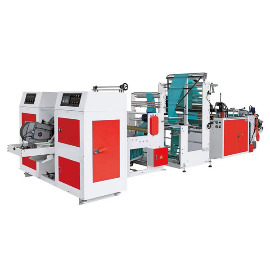
Plastic Bag Making Machine
Remote diagnostics and support: The IIoT connectivity allows the supplier's service team to remotely access the machine's controller (with the buyer's permission) for diagnostics. The service team can view the machine's status, check error logs, and even change parameters. This reduces the need for on-site visits and speeds up troubleshooting. The remote access is secured with a VPN and two-factor authentication. The buyer can also grant temporary access to the supplier for specific issues. The remote diagnostics can reduce the average resolution time by 50%. The machine's control system also has a local web server that provides a diagnostic interface. The buyer's maintenance team can use it to check the machine's health without the cloud. The cloud platform also provides a knowledge base with troubleshooting guides and FAQs.
Integration with MES/ERP: The machine's data is integrated with the MES (Manufacturing Execution System) for production tracking. The MES receives the production count, reject count, and downtime reasons. The MES updates the order status and triggers material replenishment. The MES also calculates the OEE and provides performance reports. The integration is done via OPC UA or a REST API. The buyer should define the data mapping: which data points correspond to which MES fields. The machine's control system should also have a "production order" interface, where the MES can send the target production count and the bag recipe. The machine automatically loads the recipe and starts production. This reduces operator intervention. The IIoT integration also supports "predictive maintenance" by sending diagnostic data to the supplier's service platform. The supplier can then proactively suggest maintenance actions. The buyer should consider the total cost of the IIoT solution, including cloud subscription fees and data transmission costs. The benefits (reduced downtime, better quality, improved efficiency) often justify the investment. By implementing IIoT and remote monitoring, bag making machines become part of the smart factory, enabling data-driven decision-making and continuous improvement.