Bag Making Machine Efficiency Technical Deep Dive: Material Waste Reduction and Scrap Management
Material waste is a significant cost driver in bag making. Typical waste ranges from 2-5% of the film input, but can be higher for complex bags or during changeovers. The waste sources include edge trim (from slitting), startup waste (initial bags), rejects (defective bags), and splice waste. Reducing waste improves material efficiency and lowers production cost. The primary method to reduce edge trim is to use a high-precision edge guide (±0.5 mm) to minimize the trim width. The trim width is typically 5-15 mm per side; reducing it by 2 mm saves 4 mm of film width, which can increase material yield by 1-2%. Some machines use a "zero trim" process where the film is slit to the exact bag width, eliminating edge trim. This requires precise film width control from the extruder. The zero trim process is more common in integrated extrusion-bagging lines. Startup waste occurs when the machine is started after a changeover. The waste can be reduced by using automatic recipe recall to quickly set the correct parameters, and by using a "splice" detection to skip the waste. The startup waste is typically 10-50 bags; reducing it by 50% can save significant material over time. Reject minimization is achieved through in-line vision inspection and closed-loop control. The vision system detects defects and rejects only the defective bags, not the entire bundle. The reject rate is typically 1-3%; reducing it to 1% saves 2% of material. The reject data is also used to identify the root cause (e.g., temperature drift, film quality) and correct it.
Scrap management: The edge trim and rejected bags are collected and recycled. The edge trim is pulled by a nip roller into a granulator, where it is chopped into flakes. The flakes can be fed back into the extruder (in-line recycling) or collected for off-line recycling. In-line recycling reduces waste disposal costs and material cost, but it requires careful control of the recycled flake percentage (typically 10-30%) to maintain film quality. The granulator's blade clearance and screen size are optimized to produce uniform flakes. The granulator's motor current is monitored; a sudden increase indicates a jam or dull blades. The rejected bags are also collected and can be recycled, but they may be contaminated with printed ink or adhesive, making them less suitable for in-line recycling. The buyer should consider a central scrap collection system that automatically sorts and conveys the scrap to a recycling area. The scrap's value is reduced if it is mixed; therefore, the machine should have separate collection bins for trim and rejected bags. The scrap data (weight per shift) is logged and used for waste reduction initiatives. The machine's control system can calculate the material efficiency (bag weight / film input) and display it on the HMI.
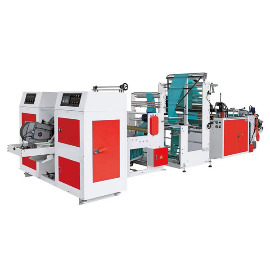
Plastic Bag Making Machine
Waste reduction through process optimization: 1) Optimize the sealing temperature to reduce rejects. 2) Use high-quality film with consistent properties. 3) Implement quick-change tooling to reduce startup waste. 4) Use automatic splicers to reduce splice waste. 5) Use a vision system for early defect detection. 6) Use predictive maintenance to prevent quality issues. The buyer should set a waste reduction target (e.g., reduce waste from 3% to 2%) and track progress. The machine's control system can provide real-time waste data, allowing the operator to take corrective action immediately. For example, if the reject rate increases during a shift, the operator can check the sealing temperature or film quality. The waste data is also used for supplier performance evaluation; a supplier whose film causes higher waste may be replaced. By systematically reducing material waste, bag making machines achieve higher material efficiency, lower production costs, and improved sustainability.