Bag Making Machine Factory Technical Deep Dive: Factory Layout and Production Flow Optimization
A bag making machine factory's layout and production flow directly impact manufacturing efficiency, quality, and delivery times. A well-designed factory follows lean manufacturing principles: minimizing material movement, reducing work-in-progress inventory, and ensuring smooth workflow. The factory is typically divided into several functional areas: raw material storage, machining workshop, sheet metal fabrication, welding, paint shop, assembly hall, electrical panel building, and testing area. The layout should be arranged in a U-shape or cellular flow, where materials move logically from one process to the next, minimizing backtracking. The machining workshop should be located near the raw material storage; the assembly area should be adjacent to the machining and electrical sections. The testing area should have easy access to the assembly hall. Conveyor systems and overhead cranes should connect the areas. The production flow should be pull-based, where the assembly area signals the machining area when components are needed, reducing work-in-progress. The factory should have dedicated assembly lines for different machine models (e.g., flat bag machines, T-shirt machines, heavy-duty sack machines). Each line should have assembly stations with specific tasks, and the line should be balanced to avoid bottlenecks. The cycle time of each station should be approximately equal, matching the desired throughput.
Material handling and storage: Raw materials (steel, aluminum, electrical components) are stored in a warehouse with systematic bin locations. A Kanban system is used to replenish materials to the production floor. The factory should have adequate lifting equipment (overhead cranes, forklifts) to handle heavy components. The assembly area should have workstations with tool boards, parts bins, and assembly jigs. The use of error-proofing devices (poka-yoke) is important to prevent assembly mistakes. For example, connectors and wiring are color-coded; components are keyed to prevent wrong installation. The factory should have a clean room or at least a dust-controlled area for electrical assembly. The paint shop should be separated from other areas to prevent dust contamination. The factory layout should also include space for quality inspection at each stage: incoming inspection, in-process inspection, and final inspection. The testing area should have multiple bays to run multiple machines simultaneously, reducing the bottleneck. The factory's overall equipment effectiveness (OEE) should be tracked, and layout adjustments are made to improve OEE.
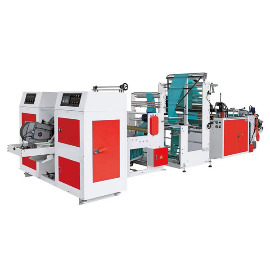
Plastic Bag Making Machine
Lean manufacturing tools: The factory should use 5S (Sort, Set in order, Shine, Standardize, Sustain) to maintain an organized workplace. Visual management is used: boards display production status, quality metrics, and maintenance schedules. The factory should conduct regular Kaizen events to improve processes. Value stream mapping is used to identify and eliminate waste. The assembly line should be balanced using the takt time – the rate at which machines need to be produced to meet customer demand. If takt time is 10 hours per machine, and the assembly line has 5 stations, each station should have a cycle time of 2 hours. If a station has a longer cycle time, it is a bottleneck; improvements are made to reduce it. The factory should also have a preventive maintenance program for all equipment (CNC machines, cranes, test equipment) to prevent unplanned downtime. Spare parts for production equipment are kept in a separate storage area.
Quality gates and traceability: At each production stage, a quality gate is established – a checklist of inspections that must be passed before the component moves to the next stage. Each machine has a unique serial number, and all production data (component measurements, assembly records, test results) are linked to that serial number. This traceability is essential for warranty claims and continuous improvement. The factory should have a non-conformance area where defective parts are quarantined and analyzed. The root cause is identified, and corrective actions are implemented. The factory's management should review production and quality data daily in a morning meeting, addressing any issues. By optimizing factory layout and production flow, bag making machine factories achieve higher efficiency, consistent quality, and faster delivery, making them competitive and reliable partners for buyers.