Bag Making Machine Heat Sealing Technical Deep Dive: Seal Integrity Testing and Failure Analysis
Seal integrity is the most critical quality parameter in bag making. It is tested using peel strength, burst strength, and hot tack tests. Peel strength (ASTM F88) measures the force required to separate the seal. A sample bag is cut to a 25mm wide strip, and the seal is pulled apart at a constant rate (300 mm/min) using a tensile tester. The force is recorded; a good seal fails by film tearing, not delamination. The acceptable peel strength is typically 20-30 N/25mm for LDPE. Burst strength (ASTM F1140) measures the seal's resistance to internal pressure. The bag is inflated until it bursts; the pressure at burst is recorded. A good seal bursts in the film, not at the seal. Hot tack (ASTM F1921) measures the seal strength immediately after sealing, before it cools; this is important for filling operations where the bag is filled while the seal is still hot. The hot tack is measured by sealing a sample and pulling it apart after a set delay (e.g., 0.1-1 second). Hot tack is often lower than cold peel strength; it must be sufficient to withstand the filling weight.
Failure analysis: When a seal fails, the failure mode is classified: 1) Delamination – the seal separates at the interface; indicates insufficient heat or pressure. 2) Film tear – the film tears next to the seal; indicates a strong seal, but the film may be weak. 3) Burn-through – holes or discoloration; indicates excessive heat or pressure. 4) Wrinkle seal – the seal has wrinkles; indicates film tension issues. The failure analysis is done by visual inspection (magnified) and by measuring the seal width. The failure analysis is correlated with the machine's process parameters (temperature, pressure, dwell). If a delamination occurs, the temperature or pressure is increased. If burn-through occurs, the temperature or pressure is decreased. The analysis is documented in a failure mode and effects analysis (FMEA) database. The machine's control system can automatically test seal strength (using an in-line peel tester) and alert if the strength drops below a threshold. The in-line tester uses a pneumatic grip and a load cell; it takes a sample every 100 bags and measures the peel force. The data is used for SPC.
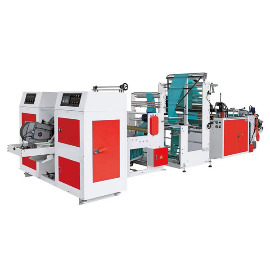
Plastic Bag Making Machine
Factors affecting seal strength: 1) Film quality – thickness, additive levels (slip agents can reduce seal strength). 2) Sealing temperature – the most critical factor; a 5°C deviation can reduce strength by 20%. 3) Sealing pressure – insufficient pressure causes delamination. 4) Dwell time – too short gives weak seals. 5) Cooling – insufficient cooling causes the seal to weaken. 6) Contamination – dirt or oil on the seal area reduces bonding. The machine's control system adjusts the parameters based on the film type and speed. The seal strength is also affected by the machine's mechanical condition; worn sealing bars cause uneven pressure. The sealing bars must be cleaned regularly to prevent residue buildup that insulates the heat. The seal strength is validated at the start of each production run and periodically during the run.
Seal integrity standards: Different industries have different standards. Food packaging often requires a minimum peel strength and a leak test (ASTM F2338). Medical packaging requires a seal strength with a defined failure mode (no delamination) and a burst test. The buyer should specify the required seal strength and failure mode in the machine's acceptance criteria. The machine's control system can store these criteria and automatically reject bags that do not meet them. The seal strength data is logged and included in the batch certificate. By implementing rigorous seal integrity testing and failure analysis, bag making machines ensure that every bag meets the quality requirements, protecting the product and the brand reputation.