Bag Making Machine Manufacturer Technical Deep Dive: Manufacturing Capabilities and Quality Control Systems
A bag making machine manufacturer's production capabilities directly determine the machine's precision, reliability, and lifespan. Evaluating these capabilities requires a deep dive into the factory's machining, assembly, and testing processes. The machining department should have state-of-the-art CNC equipment: CNC lathes, milling machines, grinding machines, and EDM (electrical discharge machining) for producing high-precision components like sealing bars, shafts, and cams. The machine tools should be from reputable brands (e.g., DMG Mori, Mazak, Haas) and maintained regularly. The precision of machining is verified by coordinate measuring machines (CMM) that measure components to ±0.005 mm. The factory's ability to produce key components in-house versus outsourcing is important; in-house production ensures better quality control and shorter lead times. The assembly line should be organized with dedicated stations for sub-assemblies (unwind stands, sealing units, punching units, stacking conveyors) and a final assembly area. The assembly process should follow detailed work instructions with quality checkpoints. The wiring of electrical panels should be neat, with labeled wires and cable ducts. The pneumatic and hydraulic systems should be tested for leaks before final assembly. The factory should have a separate testing area where each machine undergoes a run-in test for 4-8 hours with actual film.
Quality control systems: The manufacturer should have an ISO 9001-certified quality management system. The QC process includes incoming material inspection (checking steel grades, electronic components), in-process inspection (dimensional checks, surface finish), and final inspection (testing machine performance). The QC department should have calibrated instruments: micrometers, calipers, surface roughness testers, hardness testers, and thermal imagers. The factory should maintain a calibration log for all instruments, traceable to national standards. The reject rate and first-pass yield should be tracked; a good manufacturer has a first-pass yield above 95%. The manufacturer should also have a non-conformance reporting system and a corrective action process. The buyer should request the manufacturer's quality data for previous orders. The factory's cleanliness and organization (5S) are indicators of quality discipline – a cluttered, dirty factory suggests poor quality control. The manufacturer should also have a continuous improvement program (Kaizen) to reduce defects and improve processes.
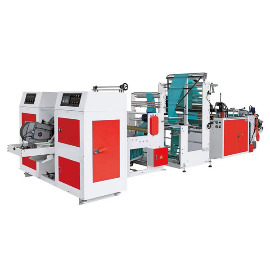
Plastic Bag Making Machine
Testing facilities: The factory should have a dedicated test area with film unwinds, printing units (if needed), and bag inspection systems. The test area should simulate real production conditions, including varying speeds and temperatures. The machine is run with the buyer's film to verify speed, bag quality, and registration. The test results are documented in a FAT report. The manufacturer should also have a test lab for material analysis: tensile testers, melt flow indexers, and seal strength testers. This enables the manufacturer to optimize the machine for different film materials. The manufacturer's ability to conduct vibration analysis and thermal imaging during testing is a plus, as it indicates advanced diagnostic capabilities. The test area should also have safety interlocks and emergency stops to protect test personnel.
Production capacity and lead time: The manufacturer's production capacity is measured in machines per month. A capacity that matches the buyer's order size is important; if the factory is overbooked, lead times may be extended. The buyer should ask about the current order backlog and the typical production cycle. The manufacturer should have a flexible production system that can handle custom orders. The availability of raw materials and components is also a factor; a manufacturer with long-term supplier contracts is more reliable. The buyer should also assess the manufacturer's supply chain resilience – e.g., do they have alternative suppliers for critical components? By thoroughly evaluating manufacturing capabilities and quality control, buyers can select a
bag making machine manufacturer that delivers consistent, high-quality machines with low defect rates and long service life.