Bag Making Machine Manufacturer Technical Deep Dive: R&D and Innovation in Bag Making Technology
A leading bag making machine manufacturer invests significantly in R&D to stay ahead of the competition. R&D efforts focus on improving machine speed, accuracy, energy efficiency, and material compatibility. The evolution of servo technology has been a major innovation: from simple servo drives to fully integrated motion control systems with electronic camming, reducing mechanical complexity and increasing flexibility. Manufacturers are now developing machines with predictive maintenance capabilities, using AI algorithms to analyze sensor data and predict component failures. IoT integration allows machines to communicate with factory MES systems, providing real-time production data and enabling remote diagnostics. The development of user-friendly HMIs with intuitive recipe management and touchscreen interfaces is another innovation. Manufacturers are also working on machines that can process sustainable materials (PLA, PBAT, recycled films) with adaptive temperature and pressure control, expanding the machine's application range. The R&D department should have a team of mechanical, electrical, and software engineers, with access to simulation tools (FEA, CFD) and test labs. The manufacturer's patent portfolio is an indicator of innovation strength.
Innovation in sealing technology: New sealing methods, such as ultrasonic sealing for heat-sensitive films and induction sealing for laminates, are being developed. Manufacturers are also exploring laser sealing for high-precision applications. The integration of vision systems for quality control and registration is becoming standard. Advanced machines use deep learning algorithms to classify defects and automatically adjust parameters. The use of lightweight materials (carbon fiber, aluminum alloys) for moving parts reduces inertia, allowing higher speeds. Manufacturers are also improving the thermal management of sealing bars with advanced coatings and zoned heating. The development of modular machine designs allows for easy upgrade and customization, reducing the total cost of ownership. The R&D team should also be working on noise reduction – machines are now quieter, with sound-dampening enclosures and active vibration control. The trend towards Industry 4.0 means that manufacturers are developing cloud-based platforms for machine monitoring, offering predictive analytics and performance benchmarking.
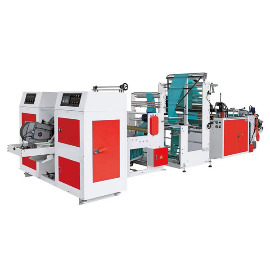
Plastic Bag Making Machine
Sustainable manufacturing: Manufacturers are focusing on reducing the environmental impact of their machines: energy-efficient servo drives, regenerative braking, and heat recovery systems. They are also designing machines that can process higher percentages of recycled content without compromising quality. The use of eco-friendly lubricants and materials in machine construction is another trend. Some manufacturers are offering take-back programs for end-of-life machines, recycling steel and electronics. The R&D department should also be exploring alternative energy sources (e.g., solar-powered heaters) and waste reduction technologies. The manufacturer's commitment to sustainability is increasingly important for buyers who need to meet their own ESG goals.
Future trends: The next generation of bag making machines will be fully autonomous, with self-calibrating systems and zero-defect production. Artificial intelligence will enable machines to learn from production data and continuously optimize parameters. The use of digital twins – virtual replicas of the machine – will allow simulation and optimization before physical changes. Manufacturers are also exploring hybrid machines that can switch between different bag types (e.g., flat to stand-up) with minimal changeover. The integration of robotics for automated bag handling and packaging will be more common. The R&D pipeline is critical for manufacturers to remain relevant; buyers should ask about the manufacturer's roadmap for new features. A manufacturer that invests in R&D is more likely to provide long-term support and upgrades for their machines. By evaluating R&D and innovation, buyers can choose a manufacturer that will be a technology partner, not just a supplier.