Bag Making Machine OEM Technical Deep Dive: Customization and Branding Integration
OEM customization of bag making machines goes beyond changing paint color; it involves deep integration of the buyer's brand identity into the machine's hardware and software. On the hardware side, customization may include: custom painting (specific RAL colors), custom decals, custom control panels, and custom guards. The manufacturer's assembly process must accommodate these variations without affecting production flow. The buyer should provide detailed CAD models for the custom parts. For the software, the HMI (touchscreen) is branded with the buyer's logo, colors, and startup screen. The software interface may be restyled to match the buyer's corporate design. The menus and terminology can be customized (e.g., using the buyer's terminology for functions). The machine's PLC program may be modified to include the buyer's proprietary algorithms (e.g., for energy saving) or to interface with the buyer's MES system. The buyer's IT team should work with the manufacturer's software engineers to define the requirements. The customization also includes the machine's manual and documentation – they are rebranded with the buyer's logo and layout. The documentation may be translated into the buyer's languages. The buyer should provide the documentation templates and content.
Technical integration: The custom machine must integrate with the buyer's existing production line. This may require custom interfaces: e.g., a specific conveyor connection, a special film guiding system, or a unique stacking configuration. The manufacturer's engineering team should review the buyer's line layout and design the interfaces. The custom machine may also need to meet the buyer's internal standards (e.g., safety protocols, material specifications). The buyer should provide a detailed integration specification. The manufacturer then designs and builds the custom interfaces. The customization also extends to the machine's labeling: nameplates, warning stickers, and operational labels are all in the buyer's brand style. The buyer should supply the label artwork. The customization process requires careful project management: the manufacturer must track all custom items and ensure they are correctly implemented. The buyer should review and approve the custom design at various milestones.
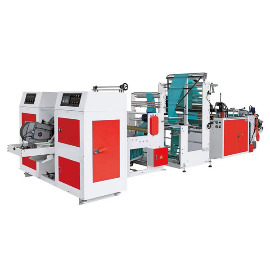
Plastic Bag Making Machine
Testing of custom features: The custom machine must undergo additional testing to verify that the custom features work as intended. For example, the custom HMI is tested for responsiveness and correctness; the custom interface to the MES is tested for data exchange; the custom conveyor is tested for alignment and speed. The custom painting is inspected for quality and durability. The manufacturer should provide a separate test plan for custom features. The FAT includes these tests. The buyer should ensure that the custom features are documented in the machine's manual. The buyer may also require a mock-up or prototype of the custom features before full production. This is especially important for software changes.
Intellectual property and exclusivity: The custom design may be unique to the OEM buyer. The contract should specify who owns the IP rights to the custom features. Typically, the buyer owns the IP for custom software and hardware designs they provided; the manufacturer owns the IP for the base machine. The buyer may request exclusivity: the manufacturer cannot sell the same custom features to other buyers for a specified period (e.g., 2 years). Exclusivity may come with a premium. The buyer should also ensure that the custom branding does not infringe on others' trademarks. The manufacturer should comply with the buyer's branding guidelines. The buyer should also protect their trade secrets by signing a non-disclosure agreement with the manufacturer. By effectively managing customization and branding integration, OEM buyers can create a distinct, branded machine that stands out in the market, commands a premium, and builds customer loyalty.