Bag Making Machine Order Technical Deep Dive: Order Fulfillment Process and Milestone Management
Placing an order for a bag making machine initiates a complex fulfillment process that involves engineering, procurement, manufacturing, assembly, testing, and delivery. The buyer should understand the typical milestones and coordinate with the supplier to ensure on-time delivery. The typical milestones are: 1) Order confirmation – the supplier acknowledges the order and provides a confirmed delivery date. 2) Engineering design (for custom machines) – the supplier's engineering team completes the detailed design; the buyer approves the design. 3) Procurement – the supplier purchases raw materials and components; the buyer may need to approve long-lead items. 4) Manufacturing – machining, welding, painting, and assembly. 5) Sub-assembly testing – individual modules are tested. 6) Final assembly – the machine is assembled. 7) Factory Acceptance Test (FAT) – the machine is tested with the buyer's film. 8) Packing and shipping – the machine is crated and shipped. 9) Delivery and installation – the machine arrives at the buyer's site and is installed. 10) Site Acceptance Test (SAT) – the machine is tested in the buyer's facility. The buyer should track the progress of each milestone. The supplier should provide regular progress reports (e.g., weekly) with photos and videos. The buyer can also schedule site visits for critical milestones (e.g., FAT). The buyer should have a project manager to coordinate with the supplier.
Milestone management: The buyer should define the milestones in the purchase contract. The contract should include a payment schedule tied to the milestones (e.g., 30% deposit, 30% on completion of assembly, 30% on shipment, 10% on SAT). This gives the buyer leverage to ensure the supplier meets the milestones. The buyer should also include a penalty clause for delayed delivery (e.g., 0.5% of the machine price per week of delay). The supplier should provide a detailed project schedule with milestone dates. The buyer should review the schedule and identify any potential risks (e.g., long lead-time parts). If a risk is identified, the buyer can work with the supplier to mitigate it (e.g., by ordering parts early). The buyer should also plan for the site preparation (floor, utilities) to be ready before the machine arrives. The site preparation should be completed at least 2 weeks before the delivery date. The buyer should also arrange for a crane and forklift for unloading. The buyer should coordinate with the supplier's installation team to schedule the installation.
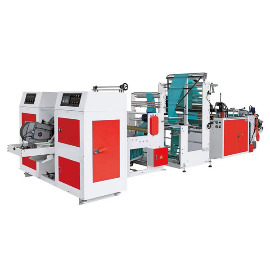
Plastic Bag Making Machine
Quality control during production: The buyer should have a quality plan that includes: 1) In-process inspections – the buyer can request inspection reports from the supplier. 2) FAT – the buyer should be present for the FAT or send a representative. 3) SAT – the buyer should conduct the SAT after installation. The buyer should also have a non-conformance process: if a non-conformance is found, it is documented and corrected. The buyer should also review the supplier's quality data (reject rates, test results) during production. The machine's serial number is assigned, and all production data is linked to it. The buyer should also ensure that the machine's documentation (manual, schematics) is complete. The buyer should also check that the spare parts kit is included. The buyer should also verify the machine's compliance with safety standards (CE, UL). The supplier should provide the necessary certificates.
Delivery coordination: The buyer should coordinate with the freight forwarder for shipping. The buyer should ensure that the shipping documents (commercial invoice, packing list, bill of lading) are correct. The buyer should also arrange for customs clearance. The buyer should inspect the crate upon arrival for damage. The buyer should also prepare the installation area and have the necessary tools (crane, forklift, leveling equipment). The buyer should also ensure that the installation team has access to the site. The buyer should also plan for operator training during the installation. The buyer should also have a punch list for the installation: any minor issues are documented and resolved. The SAT is conducted, and the machine is handed over. By effectively managing the order fulfillment process, buyers can ensure that the bag making machine is delivered on time, meets quality expectations, and is installed without delays, enabling rapid production start-up.