Bag Making Machine Price Negotiation and Total Cost of Ownership
Negotiating the price of a bag making machine involves more than haggling over the base number; it requires a thorough understanding of the included services, payment terms, and long-term costs. The total cost of ownership (TCO) over a 5-10 year period often dwarfs the initial purchase price. TCO includes: initial purchase price; installation and training costs; energy consumption; maintenance and spare parts; labor; downtime costs; and consumables. For a $100,000 machine, the TCO over 10 years might be $250,000-$350,000, depending on uptime and efficiency. Therefore, a slightly higher-priced machine that is more energy-efficient and reliable can have a lower TCO. When negotiating, buyers should ask for a detailed breakdown of the price into components: machine base, options, shipping, installation, training, and warranty. This allows for targeted negotiation – e.g., ask for a discount on the spare parts kit or free training. Payment terms: typical is 30% deposit, 30% before shipment, 30% on delivery, 10% on acceptance. Buyers can negotiate a lower deposit (e.g., 20%) and higher acceptance payment (e.g., 15%) to shift risk. A letter of credit adds costs; negotiate for wire transfer if the supplier is trusted.
Calculating ROI and payback: The ROI is calculated by comparing the machine's annual net profit (bag sales minus operating costs) to the investment. For example, a machine producing 200 BPM, running 16 hours/day, 5 days/week, 50 weeks/year, produces 96 million bags/year. If the profit per bag is $0.005, annual profit is $480,000. The machine cost $100,000, so payback is about 2.5 months. However, this is optimistic; actual profit margins are lower. A more realistic payback is 1-2 years. To improve ROI, negotiate a price that includes a starter spare parts kit and extended warranty. Also, consider the cost of financing; if paying with a loan, the interest adds to the TCO. Some suppliers offer leasing, which spreads the cost and may be tax-advantageous.
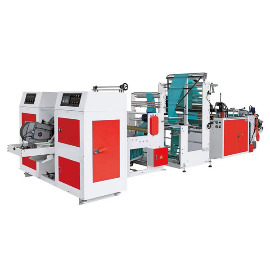
Plastic Bag Making Machine
Negotiation tactics: 1) Get multiple quotes to create competition. 2) Ask for volume discounts if ordering multiple machines. 3) Offer to be a reference site for the supplier in exchange for a discount. 4) Negotiate the exchange rate if buying internationally. 5) Ask for "free" upgrades – e.g., a better HMI or additional sensors. 6) Request a longer warranty (e.g., 24 months) instead of a price discount. 7) Ensure that the price includes installation supervision and training; these can cost $5,000-$15,000 separately. 8) Ask for a discount on the spare parts kit, which is typically 5-10% of the machine price.
Total cost of ownership calculation: Use the formula: TCO = Purchase Price + (Energy Cost per Year × Years) + (Maintenance Cost per Year × Years) + (Labor Cost per Year × Years) + (Downtime Cost per Year × Years). For a servo machine vs. a clutch-brake machine: servo is 30% more expensive but saves 30% energy and has 20% less downtime. Over 5 years, the servo may have a lower TCO. Buyers should request energy consumption data and maintenance schedules from the supplier. Also, consider the resale value; a high-quality machine retains more value.
Final negotiation: After agreeing on the price, ensure the contract includes a clear acceptance test procedure, with penalties for non-compliance. Also, include a clause for price adjustments if delivery is delayed. By thoroughly analyzing TCO and using strategic negotiation, buyers can secure a bag making machine that provides the best value, balancing upfront cost with long-term operational efficiency and profitability.