Bag Making Machine Procurement Technical Deep Dive: Contractual Terms and Legal Considerations
The procurement contract for a bag making machine is a legally binding document that defines the rights and obligations of both parties. It is essential to have a well-drafted contract that covers all critical aspects. Key clauses include: 1) Scope of supply – a detailed description of the machine, options, spare parts, and services (installation, training). 2) Technical specifications – the machine's performance criteria (speed, accuracy, seal strength). 3) Price and payment terms – the total price, payment schedule (milestone-based), and any penalties for late payment. 4) Delivery and acceptance – the delivery date, incoterms, and the acceptance test procedures (FAT, SAT). 5) Warranty – the warranty period, coverage, and exclusions. 6) Liability – limitation of liability, indemnification, and insurance requirements. 7) Intellectual property – ownership of any custom designs or software. 8) Confidentiality – protection of proprietary information. 9) Dispute resolution – the mechanism for resolving disputes (arbitration or litigation). 10) Termination – the conditions under which the contract can be terminated. The buyer should have the contract reviewed by a legal expert specializing in international machinery contracts.
Key legal considerations: 1) Liability limitation – the supplier will typically limit their liability to the contract price. The buyer should negotiate for a higher liability cap, especially for consequential damages (lost production, etc.). The buyer should also ensure that the supplier maintains adequate insurance. 2) Intellectual property – if the buyer provides custom designs (e.g., a special punch pattern), they should retain ownership of that IP. The supplier should not use the IP for other customers without the buyer's permission. The buyer should also ensure that the supplier's standard IP does not infringe on third-party patents. 3) Governing law – the contract should specify the governing law (e.g., the law of the supplier's country or a neutral country). The buyer should be aware of the legal implications of the governing law. 4) Dispute resolution – arbitration is preferred over litigation because it is faster and more confidential. The contract should specify the arbitration rules (e.g., ICC, UNCITRAL) and the venue. 5) Force majeure – the contract should define events that excuse performance (e.g., natural disasters, war). The buyer should ensure that the force majeure clause is not overly broad. 6) Compliance – the supplier should warrant that the machine complies with all applicable safety and environmental regulations (CE, UL, RoHS). The buyer should also ensure that the supplier complies with anti-bribery and labor laws.
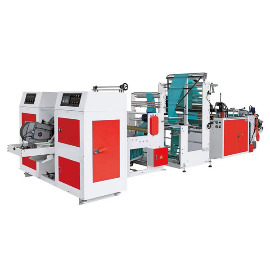
Plastic Bag Making Machine
Acceptance and rejection: The contract should clearly define the acceptance criteria. The buyer has the right to reject the machine if it fails the acceptance test. The rejection process should be specified: the supplier has a period to correct the deficiencies; if they cannot, the buyer can return the machine for a refund. The rejection clause should be carefully worded to avoid disputes. The buyer should also have the right to inspect the machine at various stages of production. The contract should also include a "punch list" for minor issues that need to be corrected after acceptance. The buyer should also have a procedure for warranty claims. The warranty period should start after the SAT is passed, not after delivery. The buyer should also have the right to withhold a portion of the payment (e.g., 10%) until the SAT is passed. This gives the buyer leverage to ensure the machine meets specifications.
Risk mitigation: The buyer should identify the key risks (delivery delay, quality issues, financial stability) and include risk mitigation clauses in the contract. For example, a penalty for late delivery reduces the risk of delay. A requirement for performance bonds or letters of credit reduces the risk of non-performance. A requirement for supplier's insurance reduces the risk of liability. The buyer should also consider the supplier's financial stability; if the supplier is financially weak, they may not honor the warranty. The buyer should request financial statements and credit reports. The buyer should also consider the supplier's past performance in similar contracts. By addressing legal and contractual considerations comprehensively, buyers can protect their interests, minimize risks, and ensure a successful procurement.