Bag Making Machine Raw Material Technical Deep Dive: Film Defects and Quality Control for Incoming Rolls
The quality of the incoming film roll is a primary determinant of bag making machine performance and final bag quality. Film defects can cause sealing issues, print defects, and bag breakage. Common film defects include: 1) Gels – small, unmelted polymer particles that appear as clear or yellowish dots. Gels cause weak spots in the film and may cause seal failure. They are often caused by cross-linked polymer or contamination. 2) Black specks – carbonized polymer or dirt particles. They are visible as dark spots and may cause aesthetic defects or film breakage. 3) Thickness variation – gauge bands that cause uneven sealing and bag length variation. 4) Scratches – surface abrasions that can weaken the film. 5) Wrinkles – folds in the roll that cause mis-feed. 6) Edge damage – ragged or uneven edges that cause wandering. 7) Blocking – the film layers stick together, causing feeding issues. The defects are caused by extrusion process issues (temperature, die gap, screw speed) or contamination. The film supplier should provide a quality certificate with the roll, including thickness profile, gel count, and COF. The buyer should conduct incoming quality checks: 1) Visual inspection under bright light – check for gels, black specks, and scratches. 2) Thickness measurement – take measurements at multiple points across the width using a micrometer or a thickness gauge; the variation should be within ±5%. 3) Roll hardness – measure with a durometer; a hard roll indicates high winding tension, which can cause stretching. 4) COF measurement – using a COF tester; the value should be within the specified range. 5) Gel count – using a gel counter or a visual inspection under a magnifying glass. The number of gels per square meter should be below the supplier's limit.
Defect classification and rejection criteria: Gels > 0.5 mm in diameter are considered critical and should be rejected. Black specks > 0.3 mm are rejectable. Thickness variation > ±7% is rejectable. Scratches longer than 50 mm are rejectable. Wrinkles that do not flatten under tension are rejectable. The buyer should have a documented quality control procedure. If a roll fails the inspection, it should be quarantined and returned to the supplier. The buyer should also track the quality of each supplier over time; if a supplier consistently delivers defective film, the buyer should switch suppliers. The film quality is also monitored during production: the machine's vision system detects defects (gels, black specks) and rejects the affected bags. The reject rate is logged; a sudden increase in rejects may indicate a bad film batch. The machine's control system can correlate rejects with the film batch number, allowing traceability.
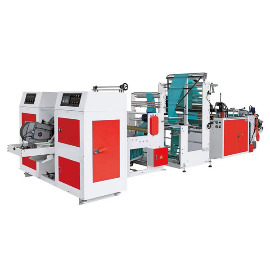
Plastic Bag Making Machine
Impact of defects on machine operation: Gels in the seal area cause weak seals; they may also block the sealing bar, causing burn marks. Black specks can cause the cutter to dull faster. Thickness variation causes the sealing temperature to be too high for thin areas (burn-through) or too low for thick areas (weak seal). Scratches cause bag breakage under load. Wrinkles cause mis-registration and jams. The machine's control system can adjust the sealing temperature based on the film thickness (using a thickness gauge); however, if the variation is too high, the adjustment may not be sufficient. The machine can also adjust the tension to compensate for thickness variation, but this may cause other issues. Therefore, preventing film defects through rigorous incoming quality control is essential. The buyer should also consider using a film slitter/rewinder to correct edge damage before feeding the film into the bag maker.
Storage and handling: Film rolls should be stored in a clean, dry, and temperature-controlled environment (20-25°C, humidity < 60%) to prevent moisture absorption and degradation. The rolls should be stored on racks with proper support to prevent deformation. The film should be used within 6 months of receipt to avoid additive migration. The roll's outer layer is often discarded because it may have absorbed dust or moisture. The splice tape should be compatible with the film; incompatible tape can cause contamination. By implementing strict quality control for incoming film rolls, bag making machine operators can prevent many production issues, reduce waste, and ensure consistent bag quality.