Bag Making Machine Repair Technical Deep Dive: Sealing Bar Resurfacing and Heater Replacement
The sealing bar is subject to wear from film abrasion, thermal cycling, and residue buildup. Over time, the bar surface becomes pitted, uneven, or warped, causing seal defects. Resurfacing involves removing a thin layer (0.1-0.5 mm) to restore flatness. The bar is removed from the machine, and its surface is ground on a precision surface grinder with a magnetic chuck. The grinding wheel is selected for the bar material (e.g., aluminum oxide for copper, silicon carbide for aluminum). The bar is cooled during grinding to prevent thermal distortion. The flatness is checked with a straight edge and a feeler gauge; the tolerance is ±0.01 mm. The surface roughness should be Ra 0.8 μm or better. After grinding, the bar is cleaned and the PTFE or silicone coating is applied. The coating is typically a tape or a sprayed-on layer; the tape is applied with a roller to avoid bubbles. The coating thickness is measured (0.1-0.2 mm). The bar is then reinstalled. The heating elements (cartridge heaters) are removed from the bar; they are inspected for resistance and insulation. The resistance should be within ±5% of the rated value; the insulation resistance (to ground) should be >1 MΩ at 500V. If the heaters are worn or damaged, they are replaced with new ones of the same wattage and voltage. The thermocouples are also replaced if they show signs of corrosion. The heaters are inserted into the bar's holes with thermal paste to ensure good thermal contact. The wiring is checked for fraying.
Heater replacement: The heater cartridge is inserted into the bar's hole; the hole should be clean and free of debris. The heater is pushed in until it seats at the bottom. The thermocouple is inserted into a separate hole, close to the sealing surface. The wires are connected to the SSR (solid-state relay) and the controller. The system is powered up, and the bar is heated to the setpoint. The temperature is checked with a reference thermometer. If the temperature response is slow, the thermal paste application or heater seating may be inadequate. The temperature uniformity is checked using a thermal imaging camera; any cold spots indicate a heater or thermocouple issue. The PID controller is re-tuned if necessary; the auto-tune function is run.
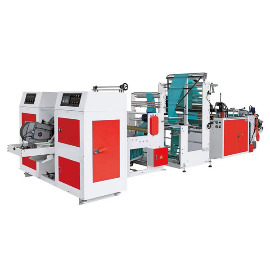
Plastic Bag Making Machine
Surface coating application: The PTFE tape is applied by wrapping it around the bar, overlapping slightly. The tape is tensioned to avoid wrinkles. A heat gun is used to shrink the tape onto the bar. The tape is trimmed at the ends. The coating's release properties are tested by pressing a hot film sample against it; the film should release without sticking. The coating's thickness is measured; if too thick, it insulates; if too thin, it wears quickly. The coating life is typically 1-3 months; the bar is resurfaced and recoated when seal defects appear.
Verification: After assembly, the machine is run with test film. The seal strength is measured and compared to the baseline. The seal appearance is inspected for burns or wrinkles. The bar temperature and pressure are logged; any deviation indicates a problem. The machine's control system stores the new heater and thermocouple calibration offsets. The repair is documented.
Maintenance scheduling: Bar resurfacing is typically done every 1-2 years, but depends on usage. The heater and thermocouple replacement is often done at the same time, even if they appear functional, to avoid future failures. By performing sealing bar resurfacing and heater replacement properly, bag making machines restore optimal seal quality, reduce rejects, and extend the service life of the thermal system.