Bag Making Machine Spare Parts Technical Deep Dive: Critical Spare Parts Identification and Lifecycle Analysis
Effective spare parts management begins with identifying critical components and understanding their lifecycle. Critical spare parts are those that, if they fail, cause significant downtime and are not readily available. For a bag making machine, the critical parts typically include: 1) Servo motors and drives – expensive and may have long lead times (2-4 weeks). 2) PLC and HMI – control system failures are rare but catastrophic. 3) Sealing bar heaters and thermocouples – essential for temperature control. 4) Sealing bar coverings (PTFE tape) – consumables that need frequent replacement. 5) Cutter blades and anvils – wear parts that affect cut quality. 6) Bearings in high-speed axes – failure causes misalignment. 7) Pressure rollers – wear affects tension. 8) Air cylinders and valves – pneumatic failures cause jams. The lifecycle analysis estimates the expected life of each part based on operating conditions. The life is expressed in operating hours or cycles. For example, sealing bar coverings last 500-2000 hours, heaters last 2000-5000 hours, blades last 5-20 million cuts, bearings last 20,000-50,000 hours. The actual life varies with the machine's speed, film type, and maintenance. The buyer should track the operating hours of each part using the machine's counters. The lifecycle data is used to schedule preventive replacements before failure.
Wear mechanisms: Understanding the wear mechanisms helps in predicting part life. 1) Abrasive wear – caused by film fillers (chalk, titanium dioxide) and is the primary wear for blades and rollers. 2) Thermal degradation – heaters and thermocouples degrade due to thermal cycling. 3) Fatigue – bearings and mechanical linkages fail due to cyclic loading. 4) Corrosion – in humid environments, electrical contacts and seals can corrode. The wear rate increases with speed and temperature. The buyer can reduce wear by: 1) Using high-quality film with low abrasiveness. 2) Maintaining proper lubrication. 3) Keeping the machine clean. 4) Using high-quality spare parts (OEM). The lifecycle analysis is also used to negotiate with the supplier; if a part fails prematurely, the supplier may provide a warranty replacement. The buyer should also consider the lead time of each part; parts with long lead times must be stocked.
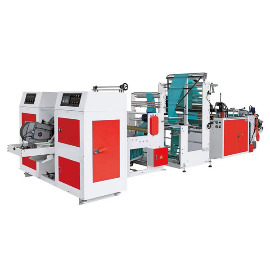
Plastic Bag Making Machine
Stocking strategies: The buyer should determine the optimal stock level for each spare part. The stock level is based on: 1) Criticality – high criticality means higher stock. 2) Lead time – long lead time requires higher stock. 3) Consumption rate – how often the part is replaced. 4) Storage cost – expensive parts may be stocked in lower quantities. The buyer can use the "Min-Max" method: set a minimum stock level (e.g., 2 pieces) and a maximum (e.g., 10 pieces). When the stock falls below the minimum, an order is placed. The buyer should also consider consignment stock – the supplier holds the stock at the buyer's site, and the buyer pays only when used. The consignment stock reduces the buyer's inventory investment. The buyer should also consider grouping parts by criticality and lead time in a matrix: high criticality + long lead time parts should be stocked; low criticality + short lead time parts can be ordered as needed. The buyer should also have a process for emergency orders – e.g., overnight shipping with a premium fee. The buyer should review the stock levels regularly (e.g., quarterly) and adjust based on usage.
Documentation and traceability: All spare parts should have a unique part number and be recorded in the maintenance management system. The system tracks the part's usage, installation date, and remaining life. The system also alerts when a part is due for replacement. The buyer should also have a spare parts catalog with photos and specifications. The catalog is used for ordering. The buyer should also have a process for obsolete parts: when a part is discontinued, the buyer should find a substitute or stock a sufficient quantity to cover the machine's remaining life. The supplier should provide a list of obsolete parts and their substitutes. By implementing a systematic spare parts management approach, buyers can ensure that critical parts are available when needed, minimizing downtime and optimizing the machine's availability.