Bag Making Machine Wholesale Technical Deep Dive: Fleet Management and Performance Benchmarking
Owning a fleet of bag making machines (from wholesale purchase) requires a systematic fleet management approach to maximize overall productivity and minimize costs. The first step is to establish a performance baseline for each machine. This is done by tracking OEE (Overall Equipment Effectiveness) for each machine over a period (e.g., 1 month). OEE = Availability × Performance × Quality. Availability measures uptime; Performance measures speed relative to rated speed; Quality measures reject rate. The fleet average OEE is calculated; individual machines with lower OEE are flagged for investigation. The machine's control system can automatically log OEE data and send it to a central dashboard. The buyer can benchmark machines against each other – e.g., Machine #3 has higher OEE than Machine #7, indicating that Machine #7 may have a setup issue or maintenance need. The fleet data can be analyzed to identify common problems – e.g., if all machines have low performance during a certain shift, it may be due to film quality or operator training. The buyer can use this data to target improvement initiatives.
Predictive maintenance for the fleet: With multiple machines, predictive maintenance is even more valuable. The fleet management system uses machine learning to predict failures based on data from all machines. For example, if the vibration pattern on Machine #5 is similar to the pattern on Machine #2 just before its bearing failure, the system alerts for Machine #5. The system can also optimize maintenance scheduling – e.g., schedule the replacement of all heaters in the fleet during a planned shutdown, rather than individually. The spare parts inventory can be managed centrally: the system tracks parts usage across the fleet and reorders automatically when stock is low. The buyer can negotiate volume discounts with the supplier for parts. The fleet management system also tracks the lifecycle of components (e.g., heater hours, cycles) and alerts when replacements are due. This reduces unplanned downtime and extends component life.
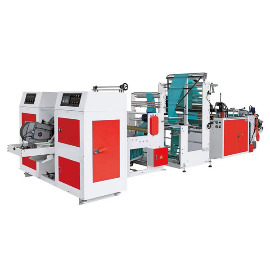
Plastic Bag Making Machine
Performance benchmarking and data analytics: The fleet data is collected in a cloud-based analytics platform. Dashboards display key metrics: average OEE, machine-specific OEE, reject rate trends, downtime reasons, and energy consumption. The buyer can compare the fleet's performance against industry benchmarks (if available) or against internal targets. The analytics can identify best practices – e.g., Machine #4 has the lowest reject rate; its settings (temperature, pressure, speed) are analyzed and applied to other machines. The system can also correlate performance with external factors: ambient temperature, film batch, operator shift. This helps in root cause analysis. The buyer can set improvement goals: e.g., increase fleet OEE from 80% to 85% in 6 months. The progress is tracked and reported.
Continuous improvement program: The fleet management system supports a continuous improvement program. Regular reviews are held with operations and maintenance teams to discuss performance data and develop improvement actions. For example, if the data shows that changeover time is a major downtime cause, the team can work on quick-change tooling or standardizing changeover procedures. The supplier can also be involved in the improvement program; they can provide training on best practices and may offer software updates to improve performance. The buyer should also consider a reward system for operators who achieve high OEE. By leveraging fleet-wide data and analytics, wholesale buyers can optimize the performance of their entire bag making machine fleet, achieving higher throughput, lower costs, and better competitiveness.