Bag Making Machine Wholesale Technical Deep Dive: Volume Pricing and Logistics Optimization
Wholesale purchasing of bag making machines involves ordering multiple units (typically 3-20 machines) to achieve cost savings and operational standardization. The primary benefit is volume pricing: suppliers offer discounts of 5-15% for 3-5 machines, 15-25% for 6-10 machines, and up to 30% for larger orders. The discount is negotiated based on the total order value. The buyer should request a tiered pricing schedule in the quotation. However, volume discounts may be offset by higher shipping costs and warehousing; the buyer should calculate the total delivered cost per machine. Logistics optimization is critical: consolidating multiple machines into fewer shipments reduces freight cost per machine. For example, two 40-foot containers can carry 6-8 machines, whereas individual shipments would require separate containers. The buyer should work with a freight forwarder to optimize container usage – machines are carefully packed and braced to maximize space. The shipping insurance is also cheaper per machine for bulk shipments. The buyer should also negotiate consolidated installation and training: the supplier sends a team to commission all machines at once, reducing travel costs and downtime. The project management for a wholesale order is more complex: the buyer needs a dedicated project manager to coordinate schedules, inspections, and payments.
Standardization and spare parts: Wholesale purchasing allows for standardization of machine specifications across multiple lines. This simplifies operator training, maintenance procedures, and spare parts inventory. The buyer can stock common consumables (sealing tapes, blades, heaters) for all machines, reducing total inventory value. The supplier can provide a single spare parts kit that covers all machines, with volume discounts on parts. The buyer should negotiate a spare parts contract as part of the wholesale deal. Standardization also facilitates predictive maintenance – the same diagnostic procedures and software are used for all machines. The buyer should ensure that the machines are identical (same model, options) to achieve full standardization. If different bag styles are needed, the machines can have interchangeable modules (e.g., different punch units) that can be swapped. The supplier should provide detailed documentation for each machine, but with a common core. The buyer should also consider the training – the supplier can train a master trainer who then trains other operators, reducing training costs.
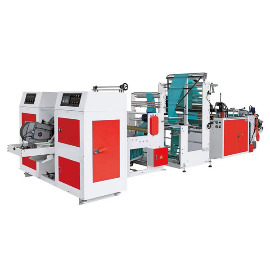
Plastic Bag Making Machine
Financing for wholesale orders: A large order requires significant capital. The buyer can negotiate favorable financing with the supplier or a bank. Some suppliers offer lease-to-own programs for bulk orders. The buyer should compare the cost of financing from different sources. The supplier may offer a discount for cash payment; the buyer should calculate the effective cost of financing vs. the discount. The buyer can also stagger the delivery and payment schedules – e.g., order 10 machines but take delivery of 5 now and 5 in 6 months, with payments aligned. This reduces the immediate cash outlay. The supplier may agree to this if the buyer provides a letter of credit. The buyer should also consider the tax benefits of bulk purchasing – depreciation and investment tax credits. The buyer's financial team should be involved in the planning.
Project management and installation: For a wholesale order, the buyer should create a detailed project plan. The plan includes: machine manufacturing timeline, FAT schedule, shipping dates, installation schedule, training schedule, and SAT timeline. The buyer should have a dedicated project manager to coordinate with the supplier and the internal team. The buyer should also prepare the facility: ensure adequate space, power, and compressed air for all machines. The installation should be phased to avoid disrupting current production. The supplier should provide a lead engineer to oversee the installation of all machines. The buyer should also plan for contingencies – e.g., if one machine arrives damaged, the spare can be used while the damaged one is repaired. The buyer should also negotiate a service level agreement for the entire fleet, with guaranteed response times. By optimizing volume pricing, logistics, and project management, wholesale buyers can significantly reduce the total cost of acquiring and operating multiple bag making machines, achieving economies of scale and a competitive advantage.