Bag Making Machine for Food Packaging Technical Deep Dive: Hygienic Design and Food Contact Compliance
Bag making machines for food packaging must comply with strict hygienic standards to prevent contamination of the bags that will come into direct contact with food. The design must ensure that all surfaces that can contact the film or the bags are smooth, non-porous, and cleanable. The machine is constructed with food-grade materials: stainless steel (304 or 316) for frames and contact parts, and FDA-approved plastics for seals and gaskets. The surface finish of stainless steel parts is typically Ra 0.8 μm or better, with no crevices or sharp corners where dirt can accumulate. The machine is designed for easy disassembly: components like sealing bars, guide rollers, and conveyors are mounted with quick-release clamps to allow thorough cleaning. The machine also includes features to prevent lubricant contamination: food-grade lubricants (NSF H1) are used for all bearings and gears, and any potential leak points (e.g., gearboxes) are sealed and located away from the film path. The electrical and pneumatic components are housed in sealed cabinets to prevent dust ingress. The machine's design follows EHEDG (European Hygienic Engineering & Design Group) guidelines, which specify criteria for cleanability and corrosion resistance.
Cleaning protocols: The machine must be cleaned regularly using food-safe detergents and sanitizers. The cleaning process often includes a CIP (Clean-in-Place) system for the film path, where cleaning solution is sprayed onto the rollers and seals. The machine's surfaces are designed to drain easily, without pooling of liquids. The cleaning frequency depends on the food product's risk level; for high-risk products (e.g., raw meat), cleaning may be required after every shift. The machine's control system can include a cleaning cycle program that disables certain components and activates cleaning sequences. The cleaning validation is performed by swabbing surfaces and testing for bacteria (ATP testing). The machine's documentation includes detailed cleaning instructions and validation records.
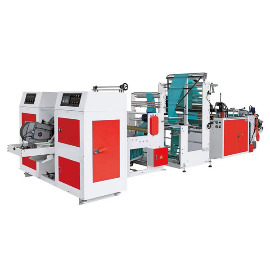
Plastic Bag Making Machine
Food contact compliance: The film materials used in the machine must be FDA-approved for food contact. The machine itself does not contact the food directly, but any contamination from the machine (e.g., lubricant, wear particles) could transfer to the film and then to the food. Therefore, the machine's components must be made of materials that are inert and non-toxic. The sealing bars are often coated with PTFE, which is FDA-approved. The heating elements and thermocouples are sheathed in stainless steel. The machine's assembly must use fasteners that do not shed particles. The manufacturer must provide a food contact compliance declaration for the machine, listing all materials that may contact the film. This declaration is often required by food safety auditors.
GMP (Good Manufacturing Practice) compliance: The machine is operated in a controlled environment with HEPA-filtered air, positive pressure, and controlled temperature and humidity to minimize contamination. The machine's design facilitates cleanroom compatibility: sealed motors, smooth exteriors, and minimal horizontal surfaces. The operators must wear appropriate PPE (gloves, hairnets, coveralls) and follow strict hygiene procedures. The machine's control system includes traceability: it records production runs, cleaning cycles, and operator IDs, enabling batch traceability in case of a food safety issue.
Validation: For medical or high-risk food packaging, the machine's sealing process must be validated to ensure that the seals meet the required strength and integrity. The validation involves running the machine with the actual film and measuring seal strength, leak rates, and dimensions over a range of speeds and temperatures. The validation data is documented and must be re-validated periodically or after any major maintenance. The machine's software includes lockouts that prevent operation if the validation parameters are not met.
By implementing hygienic design and complying with food contact regulations, bag making machines for food packaging ensure that the bags are safe for direct food contact, protecting consumer health and meeting regulatory requirements, which is essential for food manufacturers and brands.