Bag Making Machine for Retail Technical Deep Dive: Automatic Bundling and Palletizing Systems
Retail bag making machines produce bags in huge volumes, often for distribution to thousands of stores. To streamline logistics, the bags must be bundled into packs (e.g., 50, 100, or 200 bags per bundle) and then boxed or palletized. The machine's stacking unit already counts and compresses bags into bundles; however, manual handling is labor-intensive. Automatic bundling systems are integrated to automate the process. The bundles are conveyed to a bundling station where they are wrapped in a polyethylene film or a paper band. A horizontal or vertical wrapping machine applies a shrink film around the bundle, which is then heat-shrunk in a tunnel. The wrapped bundle is then labeled with a barcode and product information. The machine's control system tracks the bundle count and coordinates the wrapping process. The wrap material is fed from a roll, cut to length, and sealed around the bundle. The sealing temperature and pressure are optimized for the wrap material. The bundler's speed must match the bag maker's output; if the bundler is slower, a buffer conveyor is used.
Palletizing: After bundling, the bundles are conveyed to a palletizing station. A robotic arm or a layer-forming machine stacks the bundles onto a pallet in a predefined pattern. The palletizing robot uses a vacuum gripper or a clamp to pick the bundles. The pallet is placed on a conveyor, and the robot builds the layers. The pattern is designed to maximize stability and minimize film damage. The robot's control system receives the bundle dimensions and weight; it adjusts the grip force and placement accuracy. The palletizing station may also include a stretch wrapper that wraps the pallet with stretch film to secure the load. The palletized loads are then ready for warehouse storage or shipping. The entire process is automated, reducing labor and improving efficiency.
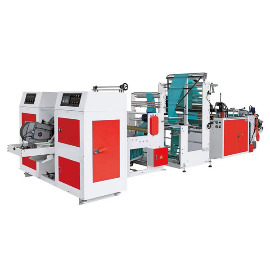
Plastic Bag Making Machine
Bundle counting and quality: The counting is already done by the stacker; the bundle count is verified by a vision system that counts the bags in each bundle before wrapping. If the count is incorrect, the bundle is rejected and sent to a manual checking station. The bundler also includes a weight check; the bundle weight is compared to the expected weight (bags × average bag weight). Any significant deviation triggers an alarm. The wrap quality is inspected for proper sealing and tension.
Integration with plant logistics: The palletizing system is linked to the plant's warehouse management system (WMS). The pallet is labeled with a QR code that contains the product type, quantity, and production date. The WMS directs the pallet to the correct storage location. The machine's control system reports the production and bundling data to the ERP system for inventory management. The system also includes safety features: light curtains around the robot area and interlocking guards.
Maintenance: The bundler's film cutter, sealer, and conveyor require regular cleaning. The palletizing robot's gripper pads need replacement. The shrink tunnel's heaters and thermocouples need calibration. The vision system's lighting must be stable. By implementing automatic bundling and palletizing, bag making machines for retail significantly reduce labor costs, increase throughput, and improve order accuracy, enabling efficient distribution to retail chains and enhancing overall supply chain performance.