Bag Making Machine for Sale: Sourcing, Due Diligence, and Contract Essentials
Sourcing a bag making machine for sale requires a structured approach to identify reliable suppliers, verify their credentials, and negotiate a contract that protects the buyer's interests. The first step is market research: identify potential suppliers through industry directories (e.g., Alibaba, Made-in-China, trade shows), ask for referrals from industry peers, and check online reviews. Shortlist 3-5 suppliers based on their product range, experience, and geographic proximity. For each supplier, conduct due diligence: request their business license, ISO certificates, and bank references. Visit their factory (or arrange a virtual tour) to assess their production capabilities, quality control, and workforce. Ask about their R&D and engineering support. Check their after-sales service network – do they have local agents or technicians? Contact their existing customers for references; ask about machine reliability, support responsiveness, and spare parts availability. The supplier's financial stability is important; if they are struggling, they may not honor warranty or provide future support.
Contract essentials: The purchase agreement should clearly define the machine's specifications, including model, speed, bag dimensions, film types, optional features, and acceptance criteria. It should include the price, payment terms, delivery date, warranty period (typically 12 months), and after-sales support. The contract should specify the incoterms (e.g., FOB, CIF) and the shipping method. A milestone payment schedule is recommended: 30% deposit, 30% upon completion of FAT, 30% on delivery, and 10% after final acceptance (SAT). The contract should include a penalty clause for late delivery (e.g., 0.5% per week). The acceptance test criteria should be detailed: speed, accuracy, seal strength, reject rate. If the machine fails the SAT, the supplier must remedy it within a specified time or the buyer can return the machine for a refund. The contract should also cover intellectual property rights if custom designs are involved.
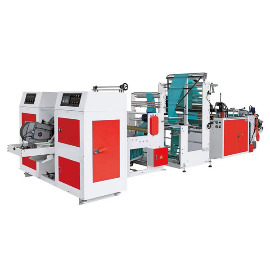
Plastic Bag Making Machine
Legal considerations: For international purchases, the contract should specify the governing law and dispute resolution mechanism (e.g., arbitration in a neutral country). The buyer should be aware of import duties and taxes; these are typically the buyer's responsibility. A letter of credit can provide security, but it adds costs and paperwork. An alternative is a wire transfer with a bank guarantee. The contract should also include a confidentiality clause to protect trade secrets. The buyer should have the contract reviewed by a legal expert familiar with international machinery trade.
Pre-shipment and shipping: After the machine is produced, the supplier conducts the FAT; the buyer should be present or have a representative. After FAT approval, the machine is crated and shipped. The buyer should coordinate with a freight forwarder and customs broker. The shipping insurance should be arranged; "all risks" coverage is recommended. Upon arrival, the machine is inspected for shipping damage; any damage should be noted on the delivery receipt and a claim filed with the insurer. The installation and commissioning are then performed, often with the supplier's technician.
Post-sale support: The contract should specify the support availability: phone, email, remote diagnostics, and on-site visits. Response times should be defined. The spare parts kit should be delivered with the machine. The buyer should also receive a maintenance manual, electrical schematics, and software backup. By conducting thorough due diligence and negotiating a robust contract, buyers can source a
bag making machine for sale with confidence, ensuring a smooth transaction, reliable equipment, and long-term partnership with the supplier.