Bag Making Machine vs Pouch and Sack Machines: Design and Capability Contrast
Bag making machines (BMM), pouch machines, and sack machines are all used for flexible packaging but are engineered for different bag types and materials. BMM typically handles thin to medium films (10-200 microns) and produces simple bags – flat, T-shirt, vest, and bottom-seal. Pouch machines are more complex, designed to produce stand-up pouches, spouted pouches, and three-side sealed pouches with features like zippers, sliders, and gussets. They operate at lower speeds (30-80 BPM) due to the multiple forming and sealing operations. The sealing force in pouch machines is moderate (2-5 tons) because the film is usually laminated and relatively thin. In contrast, sack machines handle heavy-duty woven PP or multi-wall paper, with film thickness up to 300 microns and fabric weights up to 150 gsm. They require much higher sealing force – up to 50 tons – and use hydraulic systems. Their speed is the lowest, 20-50 BPM. The material handling differs: BMM uses smooth film rolls; pouch machines use multi-layer laminates that require careful tension control; sack machines handle abrasive woven fabrics that cause wear on guides and seals.
Sealing mechanisms: BMM uses constant heat or impulse sealing with heated bars. Pouch machines often use a combination of heat sealing and ultrasonic welding for delicate materials. Sack machines use hot air sealing for coated woven fabrics or stitching for uncoated. The sealing temperature range: BMM 100-200°C, pouch 120-220°C (for laminates), sack 200-300°C (for hot air). The dwell time: BMM 0.2-0.5 sec, pouch 0.3-1.0 sec, sack 0.5-1.5 sec. The control system in pouch machines is more complex due to multi-station synchronization; they often have a rotary turret design. Sack machines have simpler control but require rugged components.
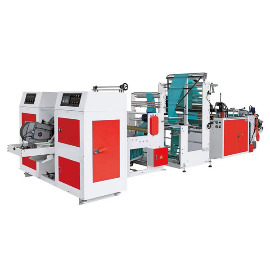
Plastic Bag Making Machine
Automation and add-ons: BMM can include printing, punching, and stacking. Pouch machines can include spout insertion, slider application, and gas flush. Sack machines can include valve insertion and block bottom folding. The changeover time: BMM 5-15 minutes; pouch machines 15-30 minutes; sack machines 20-60 minutes due to heavier tooling.
Cost: BMM is the least expensive ($50k-$200k), pouch machines are mid-range ($100k-$400k), and sack machines are the most expensive ($150k-$500k). The maintenance cost: BMM has moderate maintenance; pouch machines require skilled technicians for complex seals; sack machines have high maintenance due to abrasive wear.
Choosing the right machine: If the product is a simple bag for retail or garbage, a BMM is the best choice. If the package needs to stand up, have a zipper, or a spout, a pouch machine is required. If the package is heavy-duty for cement or feed, a sack machine is necessary. Some manufacturers produce convertible machines that can switch between bag types, but they are typically less efficient. By understanding these technical contrasts, buyers can select the equipment that matches their material, bag style, and volume requirements, ensuring optimal performance and cost-effectiveness.