Biodegradable Bag Making Machine Technical Deep Dive: Film Slippage and Tension Control for Soft Films
Biodegradable films, especially PLA, have lower tensile modulus (2-3 GPa vs. 5-6 GPa for LDPE) and higher elongation at break (200-400% vs. 100-200% for LDPE). This makes them more prone to stretching and necking under tension. In a bag making machine, this requires a different approach to film handling. The tension setpoint must be significantly lower – typically 5-15 N for a 600 mm wide film, compared to 20-30 N for PE. The unwind brake must have fine adjustment; a servo-driven unwind with a load cell provides precise control. The dancer arm must have a longer stroke (150-200 mm) to absorb speed variations without causing tension spikes. The pull rollers must be made of a soft rubber (60-70 Shore A) with a high friction coefficient to avoid slippage. The nip pressure is also lower (1-2 bar) to prevent film marking. The film's slip properties (coefficient of friction, COF) are often modified with slip additives; however, these additives can migrate and contaminate the sealing area. The machine's control system monitors the tension and adjusts the pull roller speed to maintain constant film advance. Any tension spike causes the film to stretch, changing the bag length. The registration system must compensate for stretch by adjusting the cut length dynamically.
Anti-block additives: Biodegradable films are prone to blocking (sticking together). The film contains anti-block additives (silica, talc) that create a microscopic roughness. The machine's film handling rollers must be clean to avoid scratching. The stacking system may require extra separation – using an air blower or a vacuum system to separate bags. The perforation strength for garbage bag rolls must be carefully set; the film's lower tear strength means that too deep a perforation can cause premature tearing. The machine's control system can adjust the perforation depth based on the film's tear strength.
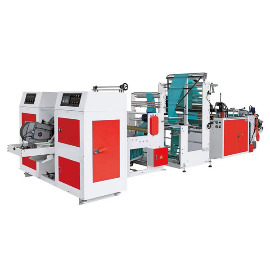
Plastic Bag Making Machine
Static control: Biodegradable films generate static electricity, causing bags to stick to rollers and each other. The machine must have anti-static bars (ionizing) at multiple points, especially before the sealing and stacking stations. The static charge is measured by a static meter; the controller adjusts the ionizer output.
Process optimization: For each biodegradable film type, the machine's recipe must include specific tension, pressure, and speed settings. The changeover from PE to biodegradable may require cleaning the film path to avoid contamination. The machine can include a "biodegradable mode" that sets all parameters to default safe values. The film's moisture content also affects its stiffness; the machine may include a dehumidifier in the film storage area. The sealing bar's temperature must be adjusted for the film's moisture level, as moisture lowers the melting point.
Quality control: The bag dimensions are measured more frequently because stretch can cause length variations. The machine's vision system checks bag length and width; if deviations exceed tolerance, the tension or cut length is adjusted. The seal strength is tested; any weakness may indicate excessive tension causing film thinning at the seal. By managing slippage and tension carefully,
biodegradable bag making machines produce consistent bags without film distortion, ensuring that eco-friendly packaging meets quality standards.