Garbage Bag Making Machine Technical Deep Dive: Perforation Strength and Tearability Optimization
The perforation line is the key feature that allows users to tear off individual garbage bags from a roll. The perforation consists of a series of small cuts (or slits) made across the film. The perforation strength (the force required to tear) must be consistent and within an optimal range – typically 1-4 N for standard LDPE films. If too low, the bag tears prematurely; if too high, the user struggles to tear it. The perforation is created by a perforating blade (often a serrated wheel or a rotary die) that presses against a backing roller. The blade's tooth geometry (depth, pitch, and shape) determines the perforation pattern. The tooth depth controls the remaining material between cuts; a deeper cut leaves less material, reducing tear strength. The pitch (distance between teeth) affects the number of cuts per unit length; a shorter pitch gives a smoother tear but more cuts, which may weaken the film. The blade pressure must be precisely adjusted; too high cuts completely, too low leaves no perforation. The blade is typically made of tool steel or tungsten carbide, and its sharpness is critical. The blade life is 5-20 million cycles, depending on film abrasiveness.
The perforation unit is positioned after the sealing station and before the winding station. The film passes between the perforating blade and the backing roller. The blade is driven by a servo motor that matches the film speed. The perforation can be applied continuously (every bag) or selectively. The depth is controlled by the gap between the blade and the backing roller; a micrometer adjustment sets the gap. The machine's control system can adjust the gap based on feedback from a tear force tester. Some machines have an in-line tear tester that pulls a bag from the roll and measures the peak force; if it deviates from the setpoint, the machine automatically adjusts the blade depth. This closed-loop system maintains consistent perforation quality.
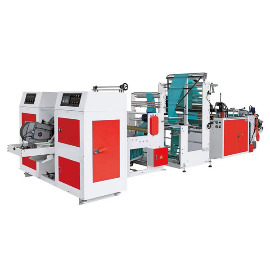
Plastic Bag Making Machine
Perforation pattern optimization: The pattern can be a straight line, a zigzag, or a combination. A straight line is simple but may tear unevenly. A zigzag pattern provides a more controlled tear and is often used for thicker films. The pattern is determined by the blade's tooth shape. The machine can have interchangeable blades for different patterns and film types. The perforation must also align with the bag seals and any print; misalignment causes the tear to occur through the seal or print, weakening the bag. The registration system ensures that the perforation is placed at the correct position relative to the print marks.
Tearability testing: Tear force is measured by a tensile tester that grips the bag on both sides of the perforation and pulls at a constant speed. The force-displacement curve is recorded; the peak force is the tear strength. The acceptable range is specified for each bag type. The machine's in-line tester uses a similar principle but with a smaller sample. The data is used for SPC (statistical process control). If the tear strength shows a trend (e.g., increasing over time), the operator can adjust the perforation depth.
Perforation dust and cleanliness: The perforation process generates film dust (small particles). This dust can accumulate on the blade and backing roller, affecting cut quality. A vacuum extraction system is used to remove dust. The blade and roller are cleaned regularly. Some machines use a blower to keep the perforation area clear. The dust can also contaminate the film, causing seal defects; therefore, the extraction system is vital.
Maintenance: The perforating blade requires regular sharpening; a dull blade produces ragged perforations. The backing roller must be inspected for wear; a worn roller causes inconsistent depth. The gap must be checked daily. By optimizing perforation strength and tearability,
garbage bag making machines produce rolls that are easy to use and reliable, enhancing consumer satisfaction and reducing complaints.