Paper Bag Making Machine Technical Deep Dive: Gluing Systems and Adhesive Application Control
Paper bag making machines use adhesives (cold glue, hot melt, or starch-based) to bond the side seams, bottom flaps, and handles (if applicable). The adhesive application is a critical process that affects bag strength, appearance, and production speed. Cold glue (polyvinyl acetate or starch-based) is water-based, applied by a roller or a nozzle system. The glue viscosity is controlled by temperature and water content; a viscometer or a flow meter provides feedback to adjust the dilution. The glue is applied in a thin, continuous line on the paper surface. The amount of glue is critical: too much causes oozing and sticking; too little causes weak bonding. The glue application pressure and speed are synchronized with the paper feed. For hot melt adhesives (EVA-based), the glue is heated to 120-180°C and applied by a heated nozzle or slot die. Hot melt sets quickly, allowing higher speeds (up to 250 BPM), but requires temperature control and is more expensive. The hot melt system includes a melting tank, a heated hose, and a precision applicator head. The applicator head may have multiple nozzles for different glue lines. The adhesive is applied to the bottom flaps and side seam. The bag is then passed through a press station that applies pressure to ensure good contact. The press force is 2-5 bar, and the dwell time is 0.2-0.5 seconds. For cold glue, a drying section (hot air or IR) may be needed to set the glue before stacking.
Viscosity control: For cold glue, viscosity changes with temperature and water evaporation. An automatic viscosity controller adds water or solvent to maintain the setpoint. The viscosity is measured by a rotational viscometer or a pressure drop across a flow restrictor. The control algorithm uses a PI loop to adjust the water addition. The glue circulation system includes a pump, filter, and a temperature-controlled reservoir. The glue lines are cleaned daily to prevent clogging. For hot melt, viscosity is controlled by temperature; a PID controller maintains the melt temperature within ±2°C. The hot melt tank has a level sensor to ensure adequate supply. The adhesive application is verified by a glue detection sensor (capacitive or optical) that checks the presence of glue on the paper; if missing, the bag is rejected.
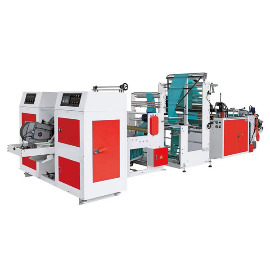
Plastic Bag Making Machine
Application methods: Roller applicators use a gravure roller to transfer a measured amount of glue; the roller is engraved with cells that hold the glue. The glue volume is determined by the cell depth and the doctor blade pressure. Slot die applicators provide a continuous bead of glue; the bead width and thickness are controlled by the die gap and pump speed. For high-speed machines, slot dies are preferred for their accuracy and consistency. The applicator head must be positioned precisely relative to the paper edge; a misalignment of 1 mm causes glue to miss the flap.
Seal strength optimization: The seal strength is tested by peel test; the failure should be paper tearing, not glue delamination. The glue amount and curing time affect strength. For cold glue, the drying time is a limiting factor; machines may include a heated tunnel or a longer conveyor to allow sufficient drying. For hot melt, the cooling time is needed; the bag may pass over a chill plate. The machine's control system adjusts the glue amount based on the paper weight and speed; heavier papers require more glue. The glue temperature for hot melt is set to the manufacturer's recommendation; a deviation of 5°C can reduce bonding.
Maintenance: The glue applicator rollers and nozzles require daily cleaning to prevent drying and clogging. The hot melt system must be purged regularly to remove carbonized glue. The glue filters must be replaced. The viscosity sensor and temperature sensors need calibration. By optimizing gluing systems,
paper bag making machines produce strong, clean, and aesthetically pleasing bags, essential for retail and food packaging where appearance and durability are key.