Side Sealing Bag Making Machine Technical Deep Dive: Gusset Formation and Square Bottom Designs
Side sealing bag making machines are often used to produce side-gusseted bags, where the sides are folded inward to allow the bag to expand when filled. The gusset is formed by a series of folding plates that progressively fold the film edges. The gusset depth is adjustable. The folding is performed before the side seal. After folding, the side seal is applied through the folded layers, which may be up to four layers thick. This requires higher sealing force and temperature. The folding plates are precision-made and must be aligned to produce symmetrical gussets. The gusset former is often a separate module that can be adjusted for different depths. The film tension through the former must be precise; too high causes wrinkles, too low causes the gusset to unfold. Some machines use a creasing roller to pre-crease the fold line, making the gusset more defined.
Square bottom bags (also called block bottom or flat bottom) are a variant where the bag has a flat bottom, allowing it to stand upright. This is achieved by folding the bottom portion of the film into a rectangular shape, with overlapping flaps that are sealed. The bottom folding is more complex than side gussets; it requires a series of folding bars and a bottom sealing station. The machine must fold the bottom into a predefined pattern (like a box bottom) and then seal the flaps. The bottom seal must be strong to hold the bag's contents. The bottom forming station often uses a combination of mechanical folds and hot air or heat to set the fold. The bottom folds are typically sealed with a hot melt adhesive or a heat seal. The square bottom design is popular for premium packaging like coffee and pet food. The machine's registration must ensure that the bottom fold aligns with the print and the side seals.
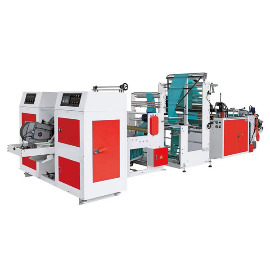
Plastic Bag Making Machine
Integration of gusset and bottom forming: These features can be combined to produce a stand-up pouch with a bottom gusset and side seals. The machine becomes more complex, with multiple folding stations and seals. The control system must coordinate all the axes. The film feed must be precise to ensure that the folds occur at the correct positions. The machine may have a dedicated folder and a bottom sealer. The production speed is lower (e.g., 60-100 BPM) due to the multiple operations.
Material considerations: Gusseted and square-bottom bags often use laminated films for barrier properties. The laminates may have different stiffness, affecting the foldability. The machine must have adjustable folding plates and creasing pressure to accommodate different materials. The sealing parameters must be optimized for the laminate structure, often requiring higher temperatures or longer dwell.
Quality control: The gusset depth and symmetry are checked by vision. The bottom seal strength is tested by peel and burst. The bag's stand-up stability is tested by placing it on a flat surface and measuring tilt. The machine can automatically adjust the folding plate positions based on feedback from the inspection system.
Maintenance: The folding plates and creasing rollers must be kept clean and free of scratches. The folding plate alignment must be checked regularly. The bottom sealing station's heater and thermocouple require calibration. By implementing precise gusset formation and square bottom designs,
side sealing bag making machines produce versatile, high-value packaging solutions that meet the demands of premium consumer goods, offering both functionality and shelf appeal.