Square Bottom Bag Making Machine Technical Deep Dive: Valve Insertion and Alignment for Filling
Some square bottom bags are designed with a valve – a small opening (usually at one corner or on the top) that allows product to be filled through a spout, after which the valve self-closes due to internal pressure. Valve insertion is a common feature in square bottom bags for cement, chemicals, and animal feed. The valve is typically a paper or plastic tube, folded and inserted into the bag's bottom or side corner. The insertion process involves cutting the valve material to length, folding it, and placing it between the bag's flaps before the final bottom seal is made. The valve must be positioned precisely so that it is accessible for filling and self-seals properly. The tolerance is ±2 mm. The valve insertion module is servo-driven, with a feeding roller, cutter, folding mechanism, and placement gripper. The valve is often glued with hot melt adhesive to secure it in place before the bottom seal. The adhesive application must be precise; excess adhesive can block the valve, and insufficient adhesive can cause the valve to shift.
Alignment with the filling spout: For automated filling lines, the valve must be oriented correctly so that the filling spout can enter easily. The machine's control system ensures that the valve is placed at the correct angle (typically 45 degrees) and at the correct height. The valve insertion module often has a vision system that checks the valve position and orientation; if misaligned, the bag is rejected. The valve material must have sufficient rigidity to stay open during filling but be flexible enough to seal after. The valve insertion process is integrated with the bottom folding and sealing; the valve is placed just before the flap sealing. The machine's timing must be precise to avoid disrupting the folding sequence.
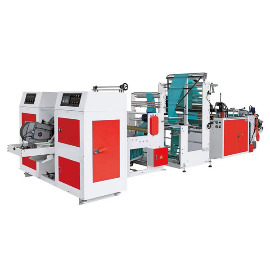
Plastic Bag Making Machine
Valve sealing and reinforcement: To ensure the valve does not leak, it is often reinforced with an extra seal or adhesive around its base. This is done by a small heating element or adhesive applicator at the insertion point. The seal must not intrude into the valve opening. The reinforcement also strengthens the valve-to-bag connection, preventing blowout during filling. The machine can test the valve opening by applying a small air pressure and measuring the flow; if blocked, the bag is rejected. This is particularly important for cement and food products where contamination is unacceptable.
Material compatibility: The valve material (paper, PE, or composite) must be compatible with the bag film for sealing and adhesive. The adhesive used for the valve must bond to both the valve and the bag film. The machine's recipe manager stores parameters for different valve types and materials.
Quality control: The valve position, orientation, and opening are inspected by vision. The adhesive coverage is checked by a UV light or a camera. The valve seal strength is tested by pulling. The machine can automatically adjust the insertion position based on vision feedback.
Maintenance: The valve feeding and cutting blades require regular sharpening. The adhesive applicator needs daily cleaning. The gripper's vacuum cups must be inspected for wear. By implementing precise valve insertion and alignment,
square bottom bag making machines produce heavy-duty sacks that are compatible with automated high-speed filling lines, essential for the construction, agriculture, and chemical industries.