Stand-Up Pouch Bag Making Machine Technical Deep Dive: Bottom Gusset Forming and Sealing Dynamics
The defining feature of a stand-up pouch (Doypack) is its bottom gusset, which allows the pouch to stand upright. The gusset is formed by folding the bottom portion of the film inward, creating a flat base. The gusset forming station is complex, using a series of folding plates, heated creasing rollers, and shaping bars. The film is folded along precise lines to create a triangular or rectangular gusset. The gusset depth (typically 30-100 mm) determines the pouch's stability and volume. The folding must be symmetrical; any asymmetry causes the pouch to lean. The creasing rollers apply heat (50-80°C) and pressure to set the crease permanently. The crease line must be sharp and precise; a poor crease causes the gusset to unfold, reducing stability. The gusset forming station is often adjustable for different pouch sizes, with quick-change tooling for changeovers. The film tension through the forming section must be carefully controlled; too high causes wrinkling, too low causes the gusset to sag. A dancer roller maintains constant tension. The gusset is then sealed – the bottom seal is applied over the folded layers, which may be 4-6 layers thick at the corners. This requires higher sealing force (up to 10 bar) and longer dwell (0.5-1.0 seconds) compared to standard seals. The sealing bar for the bottom has a stepped or contoured shape to accommodate the thickness variations across the gusset.
Sealing of the bottom gusset is critical for preventing leaks. The seal must penetrate through all layers, bonding them securely. The temperature must be high enough to melt the film layers, but not so high as to burn the thin corners. The sealing bar may have multiple temperature zones to compensate for thickness variations. Some machines use a separate pre-seal station that applies a light seal to hold the gusset in place before the final heavy seal. The bottom seal is followed by side seals, which are applied to the pouch body. The side seals overlap the bottom seal at the corners, creating a strong, leak-proof junction. The sealing of the corners is the most challenging; the film layers can be up to 6 layers thick, and the seal must be complete. The machine's control system adjusts the pressure and temperature for the corners, often using a servo-controlled pressure profile that increases at the corners. Vision inspection is used to check the bottom seal for pinholes and leaks. A leak tester (pressure decay or vacuum) can be integrated to reject defective pouches.
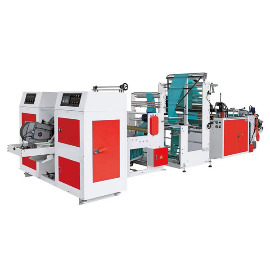
Plastic Bag Making Machine
Gusset forming mechanics: The film is guided through a set of folding bars that progressively bend the film. The folding bars are shaped to create a V-groove that forms the gusset. The film is then passed through heated creasing rollers that press the fold line. The creasing temperature must be controlled to soften the film without melting it. The creasing pressure is adjusted based on the film thickness and stiffness. The gusset depth is set by the position of the folding bars and the creasing rollers. The machine may have a servo-driven adjustment for the gusset depth, allowing quick changeover.
Material compatibility: Stand-up pouches often use multi-layer laminates (PET/Al/PE, etc.) that have different stiffness and heat resistance. The gusset forming and sealing parameters must be optimized for the laminate structure. The creasing temperature may be set to a value that softens the PE sealant layer without affecting the barrier layers. The sealing temperature is set to melt the PE layer, while the PET and Al layers remain intact. The pressure must be sufficient to bond the PE layers without puncturing the barrier. The machine's recipe management stores parameters for different laminates.
Quality control: The bottom gusset is inspected for symmetry, crease sharpness, and seal integrity. The pouch's stand-up ability is tested by placing it on a flat surface; it should stand upright without leaning. The seal strength at the bottom and corners is tested by peel and burst tests. The machine can automatically adjust the creasing pressure or seal temperature based on feedback from the inspection system.
Maintenance: The gusset forming plates and creasing rollers must be kept clean and free of residue. The sealing bars for the bottom gusset require regular cleaning and temperature calibration. The corner sealing sections need special attention. By optimizing bottom gusset forming and sealing,
stand-up pouch bag making machines produce high-quality pouches that offer superior shelf presence, convenience, and product protection for premium foods, beverages, and non-food items.