Stand-Up Pouch Bag Making Machine Technical Deep Dive: Zipper Integration and Gas Flush Systems
Many stand-up pouches are equipped with a reclosable zipper and are used for products requiring modified atmosphere packaging (MAP) to extend shelf life. The zipper applicator for stand-up pouches is similar to that for ziplock bags but must be positioned precisely on the top opening of the pouch. The zipper is applied to the film before the pouch is formed, typically on the top portion. After forming and filling, the zipper is sealed to the film. The applicator includes a zipper feeding, cutting, and positioning mechanism, with servo-driven rollers for accurate length and placement. The zipper is often attached using a hot melt adhesive or by heat sealing. The sealing temperature and pressure are carefully controlled to bond the zipper flanges without damaging the zipper teeth. The applicator also includes a zipper opening device to separate the male and female tracks before sealing, ensuring that the zipper remains open for filling.
Gas flush systems for MAP: For products like coffee, nuts, and snacks, the pouch is filled with a protective gas mixture (e.g., nitrogen, carbon dioxide) to displace oxygen and prevent oxidation. The gas flush system is integrated into the filling station. A nozzle injects gas into the pouch before the top seal is made. The gas flow rate and flushing time are controlled to achieve the desired residual oxygen level (typically below 2%). The gas is often introduced from the bottom of the pouch, pushing the air out through the top opening. The machine may have an oxygen sensor to verify the gas concentration after sealing. The gas flush system requires precise timing: the gas must be flushed while the pouch is open, and the top seal must be made immediately after flushing to prevent gas escape. The control system coordinates the gas valve, the filling, and the sealing. The gas consumption is monitored, and any deviation indicates a leak or a valve issue.
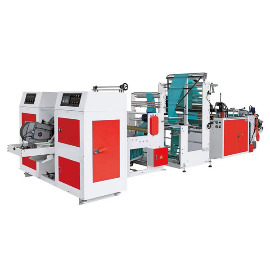
Plastic Bag Making Machine
Integration of zipper and gas flush: These features are often combined. The zipper is applied to the top, and the gas flush occurs before the zipper is sealed shut. The sealing of the zipper must be hermetic to maintain the MAP gas composition. The seal strength and integrity are tested by a leak detector (pressure decay or bubble test). The machine's control system includes recipes for different gas mixtures and flush times. The gas flush system's nozzles must be kept clean to prevent blockages; regular cleaning is essential.
Material compatibility for MAP: The pouch films must have high barrier properties (e.g., EVOH, Al) to prevent gas permeation. The sealing temperature and pressure must be optimized to seal through the barrier layers without damaging them. The zipper material must also have low gas permeability. The machine's sealing bars are designed to apply heat specifically to the sealant layer, minimizing heat transfer to the barrier. The cooling after sealing is also critical to set the seal without causing shrinkage.
Quality control: The gas concentration is measured by an oxygen analyzer; if it exceeds the limit, the pouch is rejected. The zipper seal strength is tested, and the zipper's open/close force is measured. The vision system inspects the zipper alignment and the seal appearance. The machine can automatically adjust the gas flush time and pressure based on the oxygen reading, creating a closed-loop control for MAP.
Maintenance: The gas flush nozzles must be cleaned and calibrated regularly. The zipper applicator's seals and guides need replacement periodically. The oxygen sensor requires periodic calibration. By integrating zipper and gas flush systems,
stand-up pouch bag making machines produce premium, reclosable, shelf-stable packaging that meets consumer demand for convenience and freshness, making them essential for the high-end food and beverage market.