Used Bag Making Machine Technical Deep Dive: Retrofit and Upgrades for Enhanced Performance
Retrofitting a used bag making machine can extend its life and improve performance significantly. The most impactful upgrade is converting from a mechanical clutch-brake system to a servo-driven system. This improves speed, accuracy, and energy efficiency. The retrofit involves replacing the main motor and clutch-brake with a servo motor and drive, adding encoders, and upgrading the PLC and HMI. The new servo system allows for electronic cam profiles, precise acceleration/deceleration, and regenerative braking. The speed can increase by 20-30%, and the bag length accuracy improves to ±0.5 mm. The energy consumption reduces by 30-40%. The cost of servo conversion is typically $20,000-$40,000, which is less than a new machine. However, it requires careful engineering: the new servo must match the mechanical load; the frame may need reinforcement for the higher torque. The PLC is replaced with a modern unit that supports motion control and communication. The HMI is upgraded to a touchscreen with recipe management.
Control system upgrade: Even without servo conversion, upgrading the PLC and HMI can improve diagnostics and user interface. The new PLC can include predictive maintenance features, data logging, and connectivity (OPC UA, MQTT). The HMI can provide better visualization and alarm handling. The upgrade cost is $5,000-$15,000. It also allows integration with plant MES systems. The wiring and sensors may need replacement to match the new I/O. The software development is a significant part of the cost; using a PLC with a user-friendly programming environment reduces time.
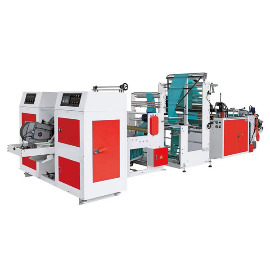
Plastic Bag Making Machine
Adding modern features: A used machine can be retrofitted with a vision system for inspection and registration, which can reduce rejects by 50%. A leak tester can be added for quality assurance. An automatic splicer can be installed to reduce downtime. These add-ons are modular and can be installed independently. However, they may require modifications to the film path and control integration. The cost of a vision system is $10,000-$20,000; a splicer $10,000-$15,000. The payback period for these upgrades is typically 1-2 years due to reduced waste and labor.
Performance verification after retrofit: After upgrades, the machine must be re-commissioned. A new FAT is performed, verifying speed, accuracy, and quality. The machine's parameters are re-tuned. The operator training should cover the new features. The machine's documentation is updated. The retrofit should be performed by experienced engineers; many machine manufacturers offer retrofit services. The buyer should obtain a warranty on the retrofit work.
Cost-benefit of retrofitting vs. buying new: A retrofit of a used machine costing $30,000 plus $30,000 in upgrades totals $60,000, while a new equivalent machine costs $100,000. The retrofitted machine may have 80-90% of the new machine's performance but a shorter remaining life (5-8 years vs. 10-15 years). The payback is faster with retrofit. For a machine that is structurally sound but has outdated controls, retrofit is a practical option. For a machine with heavy wear, it may not be cost-effective. The decision should be based on a thorough condition assessment and a clear upgrade roadmap. By retrofitting
used bag making machines, manufacturers can achieve modern performance at a fraction of the cost, extending the useful life of their capital equipment and improving competitiveness.