Woven Bag Making Machine Technical Deep Dive: Stitching and Thread Tension Control
For uncoated woven PP or jute fabric, stitching is the primary closure method. The stitching station uses a sewing head (single or double needle) that applies a chain stitch or lock stitch to close the bag bottom and/or top. The sewing head operates at 800-1500 stitches per minute, synchronized with the bag feed. The stitch length is typically 6-12 mm, and the stitch density is 3-5 stitches per cm. The needle is made of high-speed steel or tungsten carbide; its size (e.g., 18-25 Nm) is selected based on the fabric thickness and thread thickness. The thread is high-tenacity polyester or polypropylene, with a tex rating of 120-200. The thread tension is critical: too high causes the fabric to pucker; too low causes loose stitches. The tension is controlled by a series of tension discs and a spring-loaded mechanism. An electronic tension controller can adjust the tension automatically based on the fabric thickness; a load cell measures the thread tension and provides feedback to a servo motor that adjusts the tension discs. The sewing head also includes a looper that forms the loop for the chain stitch; its timing must be synchronized with the needle. The sewing head is lubricated by a drop-feed oil system; the oil must be suitable for food-grade applications if the sack is used for food.
Thread feeding: The thread is fed from a cone or a spool, passing through tensioners, a thread guide, and a take-up lever. The thread consumption is monitored; a break or run-out triggers an alarm. The machine may have a thread break detector (a spring-loaded sensor) that stops the machine if the thread breaks. The thread is often treated with a lubricant to reduce friction and improve stitch quality. The sewing head's motor is servo-driven, allowing speed control and synchronization with the bag feed. The stitch length is adjusted by changing the feed dog's stroke; the feed dog moves the fabric forward between stitches. The stitch length accuracy is ±0.5 mm.
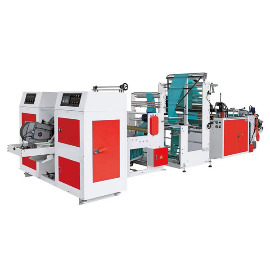
Plastic Bag Making Machine
Stitch quality control: The stitch quality is inspected by vision; defects include skipped stitches, broken threads, and excessive puckering. The machine can have a stitch monitor that measures the stitch length and tension; if a deviation is detected, the bag is rejected. The stitch strength is tested by pulling the seam; the fabric should tear before the thread breaks. The machine's control system logs stitch parameters for traceability.
Integration with bag making: The stitching station is usually placed after the cutting and before the stacking. The bags are fed continuously or intermittently; the sewing head can be mounted on a movable carriage that follows the bag (for continuous motion) or operated during a dwell. The synchronization with the bag feed is critical; a misalignment causes the stitch to start off the bag.
Maintenance: The needle must be replaced every 1-2 shifts; a dull needle causes skipped stitches and thread breakage. The looper and other moving parts require regular oiling and cleaning. The thread tension discs must be kept clean. The sewing head's timing must be checked periodically. By controlling thread tension and stitch quality,
woven bag making machines produce durable, reliable seams on uncoated fabric, suitable for agricultural and industrial bulk packaging.