bag forming machine
A bag forming machine is a specialized category of equipment focused on the critical process of shaping flat film into the three-dimensional structure of a bag or pouch, typically as part of a form-fill-seal system or as a standalone unit for pre-made bag production. The bag forming machine is distinct from general bag making machines because it specifically emphasizes the geometrical transformation of film – creating the tubular form, folding gussets, and shaping the bottom or sides to achieve the desired bag architecture. This process is fundamental to all flexible packaging, from simple pillow bags to complex stand-up pouches with bottom gussets. Bag forming machines are engineered with precision guides, folding boards, and collars that ensure the film is consistently and accurately shaped before sealing and cutting, making them indispensable for high-quality, uniform bag production in the food, medical, and consumer goods industries.
The operational mechanism of a bag forming machine varies depending on the forming technology employed. In vertical form-fill-seal (VFFS) applications, the bag forming machine uses a forming collar (or shoulder) that wraps the flat film around a vertical filling tube, creating a continuous tube. The film edges are overlapped and sealed longitudinally to form the back seal, and the tube is then conveyed downward where the bottom seal is made, followed by product filling and top sealing. In horizontal form-fill-seal (HFFS) systems, the bag forming machine uses folding plates and chains that guide the film horizontally, with the film folded over a product pushing mechanism to create a U-shape, then side seals are made to form the pouch. For pre-made bag production, the bag forming machine may involve a series of folding and tacking stations that create the bottom fold and gussets before the bag is completely sealed. The forming section is the most mechanically complex part of the bag making process, requiring precise alignment, smooth film handling, and quick-change tooling to accommodate different bag sizes and styles.
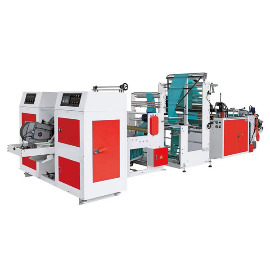
Plastic Bag Making Machine
Key technical parameters for a bag forming machine focus on forming accuracy, film compatibility, and size range. Forming accuracy is measured by the consistency of the tube circumference and the alignment of the back seal, with deviations of more than ±1 mm considered unacceptable for most packaging applications. Film compatibility includes thickness range (typically 20-150 microns for VFFS, up to 200 microns for pre-made heavy bags), film stiffness (measured by modulus), and slip properties that affect how the film slides over the forming collar. Size range includes bag width (from 30 mm for small sachets to 600 mm for large pillow bags) and bag length (variable via the pull belt length). The forming machine's design also determines the maximum gusset depth, which is critical for stand-up pouches and gusseted bags. Material of construction is usually stainless steel or chrome-plated steel for forming parts to minimize friction and resist corrosion from product residues or cleaning agents.
Different types of
bag forming machines are designed for specific bag forming tasks. The vertical forming collar, commonly known as the former or shoulder, is available in various geometries – round, square, or rectangular – to match the filling tube shape and to optimize film flow. The circular former is most common for free-flowing products, while rectangular formers are used for products with low flowability to reduce product degradation. The horizontal folding former uses a series of angled plates and conveyor belts to fold the film around the product, with mechanical or vacuum-assisted film holding to ensure the fold is crisp and consistent. For stand-up pouch forming, a special bottom gusset former is used that folds the bottom of the film into a triangular or rectangular gusset, creating a flat base for the pouch to stand. The zipper bag forming machine includes an additional forming station that aligns the zipper profile with the bag opening, ensuring the zipper is perfectly parallel to the seal. Each forming method requires a different approach to film guidance, requiring specialized machine designs and setting procedures.
Applications of bag forming machines cover the vast majority of flexible packaging formats used today. In the food industry, VFFS bag forming machines produce snack bags, frozen vegetable pouches, and powdered beverage sachets, where the forming accuracy ensures consistent fill weight and product protection. The confectionery industry uses HFFS bag forming machines for wrapping chocolate bars and candies, with the horizontal orientation preventing breakage during packaging. Medical and pharmaceutical applications use bag forming machines to produce sterile pouches for syringes and IV solutions, requiring extremely clean and controlled forming environments. The pet food industry relies on large-scale bag forming machines for multi-wall bags with block bottoms, often using pre-made bag forming equipment that can handle heavy, reinforced films. The e-commerce sector uses simple VFFS bag forming machines for poly mailer production, where the primary forming requirement is smooth, consistent tubing to allow easy insertion of goods.
Selecting a bag forming machine involves evaluating the product characteristics, packaging speed, and changeover requirements. Product characteristics, such as flowability, temperature, and abrasiveness, influence the choice between VFFS and HFFS, as well as the material of the forming collar and the ease of cleaning. Speed requirements dictate the complexity of the forming system – high-speed lines require advanced servo-driven forming collars with anti-blocking coatings to prevent film sticking, while slower lines can use simpler passive forming designs. Changeover flexibility is crucial for contract packers handling multiple SKUs; quick-release forming collars and tool-less adjustment features can reduce changeover times from hours to minutes. Evaluate the ease of film threading and the accessibility of the forming area for cleaning and maintenance. Finally, assess the supplier's capability to provide custom forming geometries for unique bag shapes, as off-the-shelf formers may not meet all application needs, and custom solutions ensure optimal film flow and bag quality.
Maintenance and optimization of the bag forming machine are often overlooked but are critical to consistent bag quality. The most common issue with forming machines is film slippage or wrinkling, usually caused by incorrect tension settings, dirty or worn forming surfaces, or improper film temperature. To maintain optimal performance, clean forming surfaces daily with a soft cloth and isopropyl alcohol to remove any film residue or dust that increases friction. Inspect the forming collar for scratches or wear that could cause film snagging; replace or re-polish worn collars as needed. Check the alignment of the forming collar with the filling tube and the sealing jaws weekly, using precision gauges to ensure concentricity. For VFFS systems, monitor the film's drag force over the collar, adjusting the air pressure on the film stabilizers to maintain consistent film tension. Keep a log of forming collar performance with each film type, noting any adjustments required, to create a reference for future setups. By paying attention to this often-neglected component, operators can significantly reduce film waste, improve seal integrity, and increase the overall efficiency of the bag packaging line.