bag making machine MOQ
Minimum Order Quantity (MOQ) is the smallest number of machines that a supplier is willing to sell in a single order, often applied to standard models, and especially for OEM or custom configurations. MOQ exists because suppliers incur fixed costs for each order – engineering setup, procurement of materials, production scheduling, and shipping. For bag making machines, MOQ typically ranges from 1 to 5 units for standard machines, and may be higher (10+) for wholesale distribution or private label orders. This guide explains the rationale behind MOQ, typical MOQ values for different machine types, how to negotiate MOQ, and the implications for buyers.
Why suppliers set MOQ: For standard production machines, the supplier already has inventory or can build one unit efficiently, so MOQ is often 1. However, for machines requiring significant customization (special width, unique punch pattern, custom software), the supplier must allocate engineering time and may need to order special components. To make this economically viable, they require a minimum number of units. For OEM orders where the buyer's brand is applied, MOQ is higher because the supplier needs to create new labels, paint colors, and packaging. Also, volume production reduces per-unit cost – suppliers can negotiate better prices for materials and optimize assembly line setup. MOQ helps them manage inventory and cash flow.
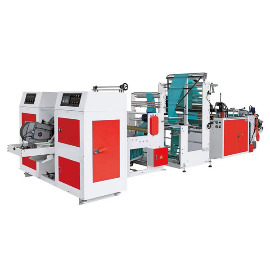
Plastic Bag Making Machine
Typical MOQ values: For standard flat bag machines from Chinese manufacturers – MOQ 1 unit. T-shirt and vest bag machines – MOQ 1-2 units. Zipper and stand-up pouch machines – often MOQ 1, but may require a higher deposit due to complexity. For heavy-duty sack machines – MOQ 1, but customizations may require 2. For wholesale distributors looking for private label – MOQ 5-10 units to justify branding and marketing costs. For container orders (sea freight efficiency), suppliers may encourage ordering 3-5 units to fill a container, offering better pricing. Always ask the supplier for their MOQ policy.
Negotiating MOQ: If you need fewer units than the stated MOQ, negotiate. Offer to pay a higher price per unit to compensate for the supplier's setup costs. Or, agree to order from the same supplier for future upgrades or spare parts to build relationship. For custom machines, propose to share the engineering cost (NRE fee) as a separate line item, allowing a lower MOQ. Some suppliers will accept MOQ 1 if you pay a higher deposit (e.g., 50%). For OEM, if you are a new brand, start with MOQ 3-5 and negotiate that the supplier retains the tooling for future orders. Always get the MOQ and pricing in writing.
Trade-offs for buyers: Ordering above MOQ can secure volume discounts (5-15% off per unit), reduced shipping cost per unit, and priority in production scheduling. However, it ties up more capital and warehouse space. If demand is uncertain, starting with the minimum is safer. Evaluate your sales forecast – if you can absorb the extra machines within 6-12 months, the discount justifies bulk ordering. Also, consider that having identical machines simplifies maintenance and spare parts. For growing businesses, ordering 2 units (one as a backup) can be wise.
MOQ for used machines: Used machines usually have MOQ 1, as they are sold individually. However, some used dealers may offer discounts for buying multiple units. In all cases, clarify MOQ before requesting a quotation. If a supplier is inflexible, consider alternative suppliers who can accommodate your order size. By understanding MOQ dynamics, you can structure your purchase to achieve the best balance of cost, risk, and supply chain efficiency.