bag making machine delivery
Delivery of a bag making machine is a critical phase that involves careful logistics planning, freight coordination, customs clearance (for international shipments), and on-site installation. The delivery timeline typically ranges from 30 to 120 days depending on whether the machine is standard or custom-built, the supplier's production capacity, and the shipping distance. Proper delivery planning ensures that the machine arrives safely, within budget, and ready for commissioning without unnecessary delays. This guide covers the entire delivery process – from order confirmation to final handover – including packaging requirements, incoterms, freight forwarder selection, insurance, unloading, positioning, and connection to utilities. It also addresses common delivery challenges and how to mitigate them.
The delivery timeline begins with the supplier's production lead time. For standard models, lead time is usually 30-60 days; for custom machines, it can be 60-120 days. Once production is complete, the machine undergoes a factory acceptance test (FAT) – this must be completed and approved before shipping. After FAT, the machine is crated for shipment. Standard crating includes wooden frames with anti-rust treatment and desiccants. Heavy machines may require special steel frames. The supplier will provide the crate dimensions and weight for freight calculation. The buyer should then arrange for a freight forwarder to handle transportation. Choose an incoterm – typically FOB (free on board) means the buyer is responsible for shipping and insurance from the factory port; CIF (cost, insurance, freight) includes these costs in the supplier's quote. For international shipments, sea freight is most common, with transit times of 20-50 days depending on origin and destination. Air freight is faster but significantly more expensive, usually reserved for urgent spare parts.
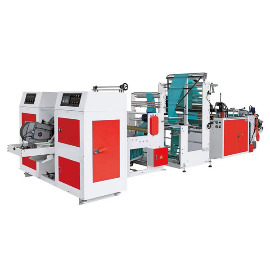
Plastic Bag Making Machine
Customs clearance is a critical step for international deliveries. The buyer must provide necessary documents: commercial invoice, packing list, bill of lading, and certificate of origin. Import duties and taxes vary by country – check with your customs broker in advance. Some countries require CE certification or other regulatory approvals; ensure the machine complies. To avoid delays, hire an experienced customs broker. Also, consider marine insurance to cover damage or loss during transit – typically 0.5-1% of the machine value. Upon arrival at the destination port, arrange for inland transportation (truck or rail) to your facility. Ensure the route can accommodate the crate dimensions and weight – check for low bridges, weight limits, and turning radii. Coordinate with your facility for unloading: arrange a forklift or crane with adequate capacity (often 3-10 tons) and clear the receiving area.
On-site installation involves positioning the machine, connecting electrical power (voltage, phase, amperage), compressed air, and cooling water (if required). Most suppliers include installation supervision in the purchase contract – their technician will visit your site to oversee the installation, align the machine, and perform the site acceptance test (SAT). The technician's travel, accommodation, and per diem are usually the buyer's responsibility. Installation typically takes 3-10 days depending on machine complexity. During installation, ensure proper leveling and anchoring to prevent vibration. After mechanical and electrical connections, the technician will power up, check safety systems, calibrate sensors, and run test batches with your film. The SAT verifies that the machine meets all specified performance criteria – speed, bag quality, seal strength, etc. Only after successful SAT should you make the final payment.
Common delivery challenges: delays in production, shipping, or customs – mitigate by ordering early and maintaining communication with the supplier and freight forwarder. Damage during transit – inspect the crate upon arrival for any visible damage; if found, note it on the delivery receipt and file a claim with the insurance. Missing components – compare the delivered items against the packing list; if any shortage, report immediately. Utility incompatibility – ensure your facility's power supply matches the machine's requirements; install transformers or converters if needed. To avoid these issues, prepare a detailed delivery checklist and assign a responsible person to coordinate each step. By planning thoroughly, you can ensure that your bag making machine is delivered safely, installed efficiently, and ready for production on schedule, minimizing downtime and additional costs.