bag making machine efficiency
Efficiency in bag making machines encompasses more than just speed – it includes material utilization, energy consumption, operator effectiveness, and overall equipment effectiveness (OEE). A highly efficient machine produces more good bags per unit of input (film, electricity, labor) and has minimal downtime. This guide covers the key performance indicators (KPIs) for efficiency, how to measure them, common sources of inefficiency, and actionable strategies to improve efficiency in your bag production operation.
OEE (Overall Equipment Effectiveness) is the gold standard for measuring machine efficiency. It is calculated as Availability × Performance × Quality. Availability = (planned production time – downtime) / planned production time. Downtime includes breakdowns, setup, and adjustment. Performance = (actual BPM / rated BPM) × 100%. Quality = (total bags – rejects) / total bags × 100%. For example, if a machine runs 450 minutes out of 480 (93.8% availability), performs at 90% of rated speed, and produces 97% good bags, OEE = 0.938 × 0.90 × 0.97 = 0.819, or 81.9%. World-class OEE is above 85%. Track OEE regularly and identify the biggest loss category (availability, performance, or quality) to focus improvement efforts.
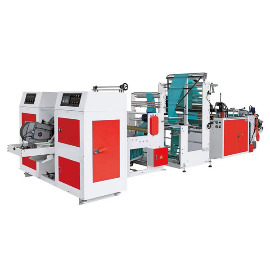
Plastic Bag Making Machine
Material waste: Film waste is a major cost driver. Sources include edge trim, startup waste, rejects, and splices. Typical waste is 2-5% of film input. To reduce waste: ensure accurate registration to minimize cutting misalignment, optimize sealing to reduce rejects, use edge guides to minimize trim width, and train operators on proper changeover procedures. For printed bags, run longer print runs to reduce startup waste. Also, recycling the edge trim in-house (with a granulator) can recover material cost. Measure waste per shift and set reduction targets.
Energy efficiency: Heating sealing bars consumes the most electricity. Use insulated sealing bars to reduce heat loss. Servo motors are 30-40% more efficient than clutch-brake systems. Use variable frequency drives (VFDs) on cooling fans and compressors. Turn off auxiliary heaters when not in use. Monitor energy consumption per thousand bags – a good benchmark is 10-20 kWh per 1000 bags for a medium-sized T-shirt machine. Implement an energy management system to track and optimize.
Operator efficiency: Well-trained operators can run machines faster, with fewer adjustments and less waste. Provide regular training on machine settings, troubleshooting, and quality control. Encourage operators to suggest improvements. Use standard operating procedures (SOPs) for startup, shutdown, and changeover. Reduce operator intervention by automating roll splicing, stack discharge, and quality monitoring. Also, ensure comfortable working conditions – good lighting, low noise, and ergonomic layout improve focus and efficiency.
Continuous improvement: Use lean manufacturing tools like 5S (sort, set in order, shine, standardize, sustain) to organize the workspace and reduce time wasted looking for tools or materials. Implement a TPM (Total Productive Maintenance) program involving operators in routine maintenance to prevent breakdowns. Analyze downtime data using Pareto charts to focus on the most frequent causes. Run Kaizen events to improve changeover speed. By systematically addressing each aspect of efficiency, bag manufacturers can significantly reduce production costs, increase output, and improve competitiveness in the market.