bag making machine factory
Visiting a bag making machine factory provides invaluable insight into the manufacturer's production capabilities, quality standards, and overall reliability. The factory is where raw materials are transformed into precision machinery through a series of processes: casting, machining, assembly, electrical wiring, programming, and testing. A well-organized factory with modern equipment, skilled workers, and rigorous quality control indicates a manufacturer that takes pride in its products. This guide takes you inside a typical
bag making machine factory, describing the key production sections, the manufacturing flow, and the critical quality checkpoints that ensure the final machine meets specifications. It also provides a practical checklist for factory visits to help buyers assess a factory's competence and professionalism.
Key production sections in a bag making machine factory: The factory typically consists of a machining workshop, sheet metal fabrication area, assembly hall, electrical panel building section, painting booth, and a testing and run-in zone. The machining workshop houses CNC lathes, milling machines, grinding machines, and EDM (electrical discharge machining) for producing high-precision components like sealing bars, cutting blades, and drive shafts. The sheet metal area cuts, bends, and welds steel frames and enclosures. The assembly hall is where sub-assemblies (unwind stands, sealing units, punch mechanisms, stacking conveyors) are built and then integrated into the main machine frame. The electrical section assembles control cabinets with PLCs, servo drives, contactors, and wiring harnesses. Finally, the testing area is where each machine is fully assembled, powered up, and run with film to verify performance before shipment.
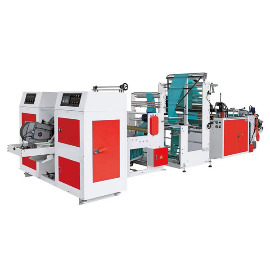
Plastic Bag Making Machine
Manufacturing flow: The process starts with raw material procurement (steel, aluminum, electrical components, bearings, motors). These are inspected for quality and stored in designated areas. Machining parts are produced according to engineering drawings, with in-process inspections using calipers, micrometers, and CMM machines to ensure tolerances within ±0.01 mm. Sheet metal parts are welded and then stress-relieved to prevent warping. Sub-assemblies are built on dedicated workstations, with each step checked by quality inspectors. The main assembly integrates all sub-systems, and the electrical panel is wired and tested for continuity. After mechanical and electrical completion, the machine goes through a "dry run" without film to check all movements and safety interlocks. Then, a "wet test" with actual film at various speeds to measure bag quality, seal strength, and registration accuracy. Any issues are corrected, and the machine is re-tested until it meets the acceptance criteria.
Quality control checkpoints: Incoming material inspection – all critical components are verified against specifications. In-process quality – dimensional checks at each machining stage. Sub-assembly testing – pneumatic cylinders are leak-tested, heaters are checked for resistance and insulation. Final assembly inspection – alignment of sealing bars, parallelism of guide rollers, tension sensor calibration. The run-in test typically lasts 4-8 hours, simulating continuous production. A final quality report is generated, listing all test results. The factory should also have a calibration laboratory for temperature and pressure gauges, traceable to national standards. Ask to see the quality records for previous machines – consistent high pass rates indicate a mature quality system.
What to look for during a factory visit: Observe cleanliness and organization – a tidy factory with clear floor markings and orderly workstations suggests disciplined operations. Check the age and condition of machining equipment – modern CNC machines indicate investment in precision. Talk to the assembly technicians – their experience and training matter. Look for a dedicated quality assurance team with separate testing equipment. Ask about the factory's production capacity (machines per month) and current workload – a factory running at 80% capacity is ideal; too low may indicate low demand; too high may risk quality. Inquire about the supplier's in-house engineering support – do they have design engineers who can customize machines? Also, check the spare parts storage – a well-stocked inventory ensures quick dispatch of replacement parts. Finally, request a demonstration of a similar machine running at full speed to witness its performance and noise levels. A thorough factory visit can confirm that the manufacturer has the technical capability, quality commitment, and production capacity to deliver a reliable bag making machine that meets your expectations.