bag making machine folding
Folding is a critical operation in bag making machines that creates the three-dimensional structure of bags, enabling features like gussets (side folds), flat bottoms, and square bases. Unlike sealing and cutting, folding shapes the film without applying heat – using mechanical folding boards, forming triangles, and creasing rollers to create precise, consistent folds that determine the bag's final geometry and volume capacity. Folding is essential for producing vest bags, stand-up pouches, square-bottom sacks, and side-gusseted flat bags. This guide covers the principles of film folding, the design of folding stations, adjustment techniques, common folding defects, and how to optimize folding for different film stiffness and thickness.
The folding station on a bag making machine typically consists of a series of folding boards (also called forming plates) and guide rollers that progressively bend the film along predetermined lines. For side gussets, the film is guided through a V-shaped former that folds the edges inward to create a pleat. The depth of the gusset determines how much the bag can expand when filled. For bottom folding (used in square-bottom and stand-up pouches), the film is folded at the bottom edge to create a flat base, often using a combination of heated creasing rollers to set the fold permanently. The folding process relies on the film's tensile strength and stiffness – too soft film may not hold the crease, while too stiff film may crack at the fold line. Therefore, folding parameters must be adjusted for each film type.
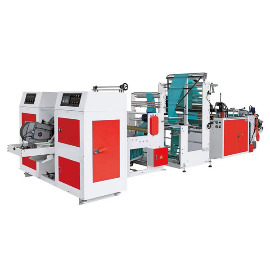
Plastic Bag Making Machine
Key components of a folding section: Folding boards – precision-machined metal plates that guide the film into the desired fold geometry. They are adjustable for gusset depth and width. Forming collars – used in vertical form-fill-seal machines to create a tube from flat film; they have a circular or rectangular cross-section. Creasing rollers – heated or unheated rollers that press a crease line into the film, making the fold permanent. Folding rods – used to initiate folds by creating a line of pressure. The entire folding section must be aligned precisely with the film path to avoid wrinkling or asymmetry. Misalignment by even 1 mm can cause visible bag defects.
Adjustment techniques: For side gussets, the depth is adjusted by moving the folding boards inward or outward. The angle of the boards also affects how smoothly the film folds – a shallower angle reduces stress on the film. For bottom gussets, the creasing rollers' pressure and temperature are key – higher temperature helps set the crease in thicker films, but too high can degrade the film. The folding station should be set up using a sample of the actual film, as different films have different bending stiffness. Operators should check the fold symmetry by measuring the gusset depth on both sides – any deviation indicates misalignment.
Common folding defects: 1) Asymmetrical gussets – caused by uneven board adjustment or film wandering. 2) Wrinkles at the fold – caused by too-sharp folding boards or excessive tension. 3) Gusset not staying flat – insufficient creasing pressure or temperature. 4) Film tearing at fold – folding boards too aggressive or film too brittle. 5) Crease lines offset – misalignment of creasing rollers. To correct, adjust the folding board angles, reduce tension, or modify creasing parameters. For sticky films, use low-friction coatings on the folding boards.
Optimization for different materials: For thin LDPE films (under 30 microns), folding requires gentle angles and low pressure to avoid crushing. For thick HDPE or biodegradable films, creasing may need heat to set the fold. For woven fabrics, folding is often combined with heat sealing to keep the fold in place. Always test with the actual production film to dial in the settings. Also, regular cleaning of the folding boards is essential – any residue can cause film sticking and mis-folds. By understanding and carefully adjusting the folding section, operators can produce bags with crisp, symmetrical folds that enhance bag appearance, volume capacity, and customer satisfaction.