bag making machine speed
Bag making machine speed, typically expressed in cycles per minute (CPM) or bags per minute (BPM), is one of the most critical performance metrics for bag manufacturers, directly determining production capacity and profitability. Speed indicates how many individual bags the machine can produce in one minute, and it varies significantly based on bag type, film material, bag size, and machine design. For a standard bottom-seal flat bag, speeds of 250-300 CPM are common, while T-shirt or vest bags with handle punching may run at 120-200 CPM. Zipper bags and stand-up pouches operate at lower speeds of 80-150 CPM due to the added complexity of zipper alignment and folding. Heavy-duty sack machines are the slowest, typically 20-40 CPM, because of the high force and longer dwell times required for thick films. Understanding the speed capability of a bag making machine is essential for capacity planning, order scheduling, and equipment selection.
Several factors influence the maximum achievable speed of a bag making machine. Film thickness is a primary factor – thinner films (20-40 microns) can run faster because they require less heat and shorter dwell times, whereas thicker films (over 100 microns) need longer sealing and cooling periods, reducing speed. Bag length also affects speed; shorter bags allow more cycles per minute as the machine's stroke length is shorter, while longer bags reduce the possible cycle rate. The type of sealing – impulse or constant heat – impacts speed; impulse sealers need cooling time between seals, limiting speed, whereas constant heat sealers can run continuously at high speed. The machine's mechanical design, including the weight of moving parts and the power of the drive system, imposes physical limits; lighter servo-driven components enable faster acceleration and deceleration. Film slip properties and anti-block additives affect how smoothly the film feeds, with high-friction films causing drag and slowing the machine.
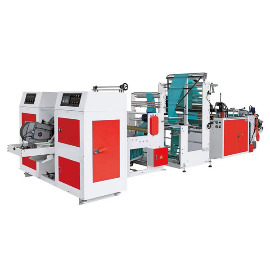
Plastic Bag Making Machine
Speed is not independent of quality; higher speeds often compromise seal strength, print registration, and cutting accuracy. At elevated speeds, the dwell time (sealing jaw contact duration) is reduced, which may lead to weak seals if the temperature is not increased proportionally. However, increasing temperature risks film degradation or burn-through. Therefore, manufacturers must find the optimal balance – a process often requiring trial runs and statistical process control. Modern servo-driven machines with closed-loop temperature and pressure control allow higher speeds while maintaining seal integrity, as they can dynamically adjust parameters in microseconds. For printed bags, high speeds challenge registration systems; only high-speed cameras with rapid response (under 10 ms) can maintain accurate registration at 200+ CPM. Cutting accuracy also suffers at high speeds if the blade or knife is not properly synchronized, leading to irregular bag lengths. Hence, speed specifications should always be accompanied by quality metrics like seal strength and length tolerance at that speed.
To optimize speed, operators can implement several practical measures. Ensure the film roll is unwound with consistent tension using a high-quality dancer system, as tension fluctuations cause speed variations and film wrinkles. Use films with slip agents and anti-static treatments to reduce friction and sticking, allowing smoother feed. Maintain sealing bars in pristine condition – clean them regularly to prevent residue buildup that increases thermal resistance and requires longer dwell times. Preheat the machine to operating temperature before starting production to avoid the need for initial slower speeds. Use rapid cooling systems (water-cooled chill rolls) to shorten the cooling phase, enabling faster cycles. Adjust the sealing pressure to the minimum required for a good seal, as excessive pressure increases dwell time unnecessarily. For machines with multiple bag lanes, ensure each lane is balanced and adjusted identically to prevent bottlenecks. Implement predictive maintenance to avoid unexpected slowdowns from worn components.
Speed specifications on datasheets often come with fine print: the rated speed is typically achieved under ideal conditions – using a specific film type (e.g., 50-micron LDPE) at a nominal bag length (e.g., 400 mm). When selecting a machine, clarify the speed at your actual bag size and film thickness, as the rated speed may not be attainable. Many manufacturers provide speed curves or performance tables that show speed vs. bag length and film thickness. It is advisable to request a factory acceptance test where the machine runs at the claimed speed with your materials. Also, consider the speed of auxiliary equipment – if the bag maker runs at 250 CPM but the stacking unit can only handle 200 CPM, the effective line speed is limited. For high-volume production, consider multi-lane bag making machines that effectively multiply the output speed by the number of lanes, achieving equivalent speeds of over 600 BPM. Ultimately, selecting the right speed involves balancing throughput needs, quality standards, and the total cost of ownership, ensuring the machine delivers the required output without sacrificing bag integrity.