bag making machine training
Training is an essential investment when acquiring a bag making machine, as even the best equipment will underperform if operators and maintenance personnel lack the necessary skills. Effective training ensures that the machine operates at optimal speed, produces consistent quality, experiences minimal downtime, and has a long service life. This guide covers the key training areas: operator training (machine operation, parameter setting, quality monitoring), maintenance training (lubrication, cleaning, calibration, parts replacement), and safety training. It also discusses training methods (on-site, classroom, remote, hands-on) and how to assess training effectiveness.
Operator training should cover the entire machine workflow: film loading, threading, setting parameters (temperature, pressure, speed, bag length), using the HMI, starting and stopping the machine, and monitoring production quality. Operators must be able to identify common defects (weak seals, wrinkles, mis-cuts) and make corrective adjustments – adjusting temperature, tension, or registration. They should also be trained on routine cleaning tasks, such as cleaning sealing bars and sensors. Emphasis should be placed on troubleshooting – knowing what to check when an alarm occurs, and when to call for maintenance. Hands-on practice is crucial; operators should run the machine under supervision until they can independently produce quality bags at speed. Training duration: typically 2-5 days depending on machine complexity.
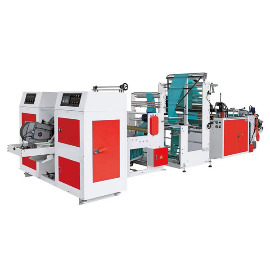
Plastic Bag Making Machine
Maintenance training is targeted at technicians and focuses on preventive and corrective maintenance. Topics include: lubrication points and schedules, cleaning procedures for sealing bars and cooling rollers, calibration of temperature sensors and pressure gauges, blade replacement and sharpening, belt and chain tension adjustment, and electrical troubleshooting (using multimeter, reading schematics). Technicians should also learn how to use diagnostic software to read error logs and monitor machine health. For servo-driven machines, training on encoder alignment and drive parameter tuning is essential. The trainer (supplier's service engineer) should provide a detailed maintenance manual and spare parts catalog. Practical exercises include disassembling and reassembling sealing bars, changing heating elements, and adjusting registration sensors.
Safety training is mandatory for all personnel. It covers: lockout/tagout procedures, emergency stop operation, guarding and interlock systems, safe handling of heated surfaces, and fire prevention (especially with flammable films). Operators must understand the risks of moving parts and hot surfaces, and know the correct personal protective equipment (PPE) to use. A safety quiz and a practical demonstration of emergency stop activation should be part of the training.
Training methods: The most effective is on-site hands-on training by the supplier's technician, using the actual machine and your film. This allows immediate application and problem-solving. Supplement with classroom sessions using presentations and videos. Provide written training materials in the operators' native language. For remote training, video calls and online modules can be used for basic concepts, but hands-on is irreplaceable. Some suppliers offer "train the trainer" programs, where they train your senior staff who then train others – this is cost-effective for large plants.
Assessing training effectiveness: After training, conduct a practical test – have operators run the machine and produce a batch of good bags within specified parameters. For maintenance staff, test their ability to perform a calibration or replace a component. Monitor performance indicators post-training: reject rate, downtime, and speed. If improvements are not seen, conduct refresher training. Maintain training records for each employee, and schedule periodic refresher courses, especially when new features are added or staff turnover occurs. By investing in comprehensive training, you empower your team to maximize the machine's potential, reduce waste, and ensure a safe working environment, ultimately leading to higher profitability and customer satisfaction.