bag making machine vs other packaging machines
When evaluating packaging equipment, it is essential to understand the differences between a bag making machine and other types of packaging machinery such as form-fill-seal (FFS) systems, pouch machines, sack machines, shrink wrappers, and vacuum sealers. Each serves a distinct purpose in the packaging workflow. A bag making machine is a primary converting machine that produces empty bags from roll stock, which are later filled and sealed separately. In contrast, a form-fill-seal machine combines bag forming, filling, and sealing into one continuous operation. Pouch machines produce pre-made pouches with complex features like spouts or handles. Sack machines focus on heavy-duty woven or paper sacks. This guide compares these technologies based on output, flexibility, cost, and application, helping buyers make informed decisions for their specific packaging needs.
Bag making machine vs. Form-Fill-Seal (FFS) machine: A bag making machine produces bags that are shipped to the customer or to a filling line, where they are opened, filled, and sealed. This two-stage process offers flexibility – the same bag machine can serve multiple filling lines, and the bags can be stored or printed separately. FFS machines, on the other hand, integrate forming, filling, and sealing in a single machine, saving floor space and reducing labor. However, FFS is less flexible – changing bag size or film type takes longer, and the machine is dedicated to a specific product and bag design. For high-volume, dedicated product lines, FFS is efficient; for contract converters who produce various bag types for different customers, a bag making machine is more versatile. Speed: bag makers can run 250+ BPM, while FFS typically runs 60-120 packs/min depending on fill weight.
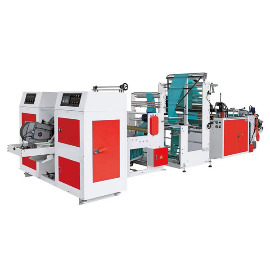
Plastic Bag Making Machine
Bag making machine vs. Pouch machine: Pouch machines produce pre-made pouches with features like spouts, sliders, or zippers, often used for liquids and premium products. They are more complex than standard bag making machines, incorporating multi-station operations for spout insertion, sealing, and hole punching. Pouch machines are slower (20-60 pouches/min) and more expensive. Bag making machines handle simpler formats – flat, T-shirt, vest, and basic zipper – at higher speeds. If your product requires a spout or a sophisticated resealable feature, a pouch machine is necessary. For standard shopping, produce, or garbage bags, a bag making machine is the cost-effective choice. Also, pouch machines typically use pre-printed roll stock, whereas bag machines can include in-line printing.
Bag making machine vs. Sack machine: Sack machines are a subset of bag making machines but are specially engineered for heavy-duty woven or multi-wall paper sacks used for cement, feed, and chemicals. They operate at lower speeds (20-50 sacks/min) and have much higher sealing force (up to 50 tons) and thicker material handling. Standard bag making machines handle films up to 200 microns, while sack machines handle 300+ microns or woven fabrics. If your application is lightweight retail bags, a standard bag machine is appropriate. For bulk industrial packaging, a dedicated sack machine is required. Some manufacturers offer convertible machines that can switch between film and woven, but they are less efficient than dedicated units.
Bag making machine vs. Shrink wrapper and vacuum sealer: Shrink wrappers and vacuum sealers are secondary packaging machines. A shrink wrapper uses heat to shrink film around a product or a group of products, while a vacuum sealer removes air from bags before sealing. These are not alternatives to a bag making machine – they are used in conjunction with it. For example, a bag making machine produces the bag, the product is inserted, and then a vacuum sealer closes it. Shrink wrappers are used for overwrapping boxes or trays. They are complementary, not competing technologies. Therefore, when comparing, it is important to distinguish between primary bag making and secondary sealing/packaging.
Selecting the right machine depends on your production flow. If you manufacture bags to sell to packagers, a bag making machine is your only option. If you have a filling line and want to integrate bag forming, an FFS machine may be suitable if your product line is dedicated. If you produce pouches for liquids or premium foods, consider a pouch machine. For heavy industrial products, choose a sack machine. Consider the total cost: bag making machines have lower initial cost and maintenance than FFS or pouch machines but require separate filling equipment. Evaluate space, labor, and changeover frequency. Also, consider future product extensions – a bag making machine can produce multiple bag styles with added modules, offering scalability. By understanding these distinctions, buyers can avoid over- or under-investing and select the equipment that best fits their operational strategy and market demands.