bag sealing machine
A bag sealing machine is a critical component in any packaging line, responsible for creating a strong, hermetic closure on filled bags to protect contents from moisture, oxygen, contamination, and spillage. While often integrated into bag making machines, standalone bag sealing machines are widely used in food processing, pharmaceutical, agricultural, and industrial packaging operations where bags are filled with product and then sealed in a separate step. Bag sealing machines apply heat, pressure, or ultrasonic energy to fuse thermoplastic films, forming a molecular bond that is as strong as the base material. The reliability of the sealing process directly affects product shelf life, safety, and consumer satisfaction, making the bag sealing machine an essential investment for any packaging operation that prioritizes quality and efficiency.
The working principle of a bag sealing machine varies according to the sealing technology employed. The most common type is the impulse sealer, which uses a nichrome wire that heats rapidly when an electrical current passes through it, remains hot for a preset dwell time to seal the bag, then cools quickly to allow the bag to be released without sticking. This design is energy-efficient and ideal for intermittent operation. The constant heat sealer maintains a fixed temperature via a thermostatically controlled heating element, suitable for continuous high-speed sealing of thin films. Ultrasonic sealers use high-frequency vibrations to generate friction heat directly within the film layers, producing a clean seal without external heat, perfect for heat-sensitive or coated films. Hot bar sealers press heated jaws directly onto the film, while band sealers use a continuous heated belt to seal moving bags at high speeds. Each method has specific advantages regarding seal strength, speed, and film compatibility, guiding the selection process.
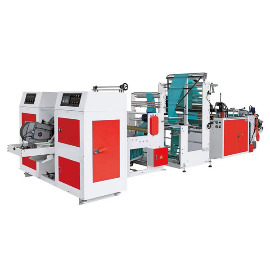
Plastic Bag Making Machine
Key technical parameters for a bag sealing machine include sealing temperature, sealing pressure, dwell time, and seal width. Sealing temperature typically ranges from 100°C to 250°C, with precise digital PID controllers maintaining accuracy within ±1°C to prevent under-sealing or burn-through. Sealing pressure, adjustable from 1 to 10 bar, is applied by pneumatic or spring-loaded cylinders to ensure uniform compression across the seal area. Dwell time, or the duration the sealing jaws remain in contact with the film, varies from 0.1 to 5 seconds depending on film thickness and machine speed. Seal width is determined by the jaw design, usually between 2 mm and 15 mm, with wider seals offering greater strength for heavy-duty bags. Other specifications include maximum bag thickness (typically up to 300 microns), sealing speed (from 10 to over 100 seals per minute), and power supply requirements (110-480V, single or three-phase). These parameters must be fine-tuned to the specific film material to achieve optimal seal integrity without degrading the film structure.
Different configurations of bag sealing machines address various production needs and bag types. The handheld impulse sealer is portable and affordable, ideal for small workshops and occasional sealing tasks. The foot-operated sealer allows hands-free operation, increasing productivity for medium-volume packaging. The automatic continuous band sealer is designed for high-speed production lines, where bags are fed continuously through the sealing mechanism, equipped with conveyor belts and cooling systems to handle outputs of 30-50 bags per minute. The vacuum chamber sealer combines bag sealing with air evacuation, extending the shelf life of perishable products. The bag clip sealer, common in agricultural and bulk packaging, applies a metal clip over the folded bag neck for a secure mechanical closure. For specialized applications, there are explosion-proof sealers for hazardous environments, sterile sealers for medical packaging, and ultra-sonic sealers for foil-lined or laminated films. The choice depends on bag material, production volume, and environmental conditions.
Applications of bag sealing machines span across all industries that use flexible packaging. In the food sector, sealers are used for packaging snacks, frozen vegetables, coffee, meat, and cheese, where hermetic seals prevent spoilage and maintain freshness. The pharmaceutical industry relies on bag sealing machines for blister packaging, IV solution pouches, and sterile device wrappers, often requiring validated seal integrity to meet FDA and ISO standards. Agricultural operations use heavy-duty sealers for fertilizer, seed, and animal feed bags, with reinforced seals to withstand stacking and transport. E-commerce fulfillment centers employ sealers for poly mailers and bubble envelopes, ensuring goods are secure during shipping. Waste management uses bag sealing machines for sealing trash bags and medical waste bags to contain odor and prevent leakage. The versatility of bag sealing machines makes them indispensable in any packaging environment where product protection is paramount.
Selecting the right bag sealing machine requires careful assessment of film type, production speed, and budget constraints. Identify the bag material and thickness; for example, polyethylene and polypropylene are sealed at 120-180°C, while polyester and nylon require higher temperatures and pressure. Evaluate the required seal strength, which may be tested by peel strength or burst strength tests, to ensure the machine can achieve the necessary specifications. Production speed determines whether a manual, semi-automatic, or fully automatic machine is appropriate, with automatic models offering higher throughput but higher cost and complexity. Consider the available floor space and power supply, as industrial sealers often require 3-phase power and compressed air. Examine the machine's sealing jaw length, which must exceed the bag opening width to provide a complete seal. Lastly, check for optional features such as date coders, perforation units, and conveyor feeders that can enhance line integration and functionality.
Proper maintenance of a bag sealing machine is essential to ensure consistent seal quality and extend equipment life. Daily cleaning of the sealing jaws with a non-abrasive cloth and approved cleaning agent removes film residue and carbon buildup that can cause uneven seals or sticking. Regularly inspect the heating elements and thermocouples for signs of wear or corrosion, replacing them as needed to maintain temperature accuracy. For impulse sealers, check the nichrome wire tension and replace it when it shows discoloration or slack. Pneumatic systems require periodic draining of moisture from air filters and lubrication of cylinders to maintain proper pressure. Calibrate the temperature controller and pressure gauge monthly using reference standards to ensure readings are accurate. Keep a log of seal test results and machine settings for each film type, enabling rapid changeover and troubleshooting. By adhering to these practices, operators can achieve high seal integrity, minimal reject rates, and reliable production performance over the long term.